IT Logistics Management
In a world dominated by technology, IT logistics management has now become the backbone of digital business operations. Whether it’s the seamless flow of hardware, software, or data, managing logistics in the IT realm is no longer a support function—it’s a strategic asset. As organizations grow more reliant on intricate IT infrastructures, the need for smarter logistics handling becomes paramount.
Let’s dive into the mechanics, challenges, and benefits of this essential discipline.
What is IT Logistics Management?
IT logistics management refers to the coordination and movement of technology resources—both physical and digital—throughout an organization’s supply chain. This includes everything from sourcing and deploying hardware like servers and networking equipment to managing cloud services, cybersecurity tools, and even IT personnel.
It combines traditional logistics principles with modern information technology strategies, making it a hybrid field that spans procurement, inventory control, transport, deployment, and support services.
In simpler terms, IT logistics management is about getting the right tech, to the right place, at the right time, with minimal risk and maximum efficiency.
Nurture IT: Take Control of Your Tech Supply Chain with Expert IT Logistics Management!
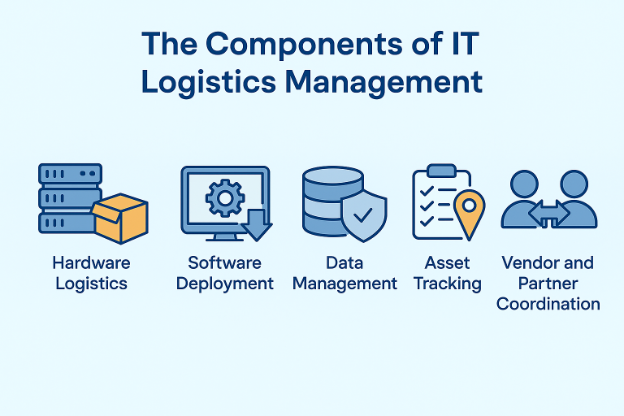
The Components of IT Logistics Management
To understand how it works, let’s break it down into key components:
1. Hardware Logistics
This involves sourcing, storing, and distributing physical assets like laptops, routers, servers, data centre equipment, and peripherals. For global companies, moving such assets across multiple locations while complying with customs, tax, and import/export regulations adds a layer of complexity.
2. Software Deployment
Managing software is more than just installing programs. IT logistics management handles version control, updates, and deployment across departments or branches. It may also involve distributing secure access to cloud-based platforms.
3. Data Management
With the rise of cloud computing and IoT, data movement has become just as critical as moving hardware. Thus, logistics in this domain revolves around data backup, recovery, synchronization, and storage—across both physical and virtual environments.
4. Asset Tracking
Knowing the location, status, and condition of every IT asset in real time is vital. As a result, modern IT logistics management systems use RFID tags, barcodes, GPS, and other tracking technologies to maintain visibility and minimize loss or theft.
5. Vendor and Partner Coordination
Collaboration with suppliers, service providers, and external IT partners is a cornerstone of efficient operations. Therefore, managing SLAs (Service Level Agreements), timelines, and service quality is part of logistics coordination.
Why Effective IT Logistics is Essential for Modern Businesses
Organizations often underestimate the logistical challenges that come with managing complex IT ecosystems. Without a robust logistics framework, even minor delays in equipment delivery or software rollout can stall entire projects.
Here’s why IT logistics management has become indispensable:
1. Business Continuity
Today, even a few hours of system downtime can result in financial losses and damage to brand reputation. From banking services in Tier-2 cities to real-time order processing in e-commerce hubs like Jaipur or Indore, businesses require well-planned logistical frameworks to keep their IT infrastructure functioning during upgrades, migrations, or unforeseen outages. A reliable IT logistics system helps keep things running smoothly without disruption—whether during a power outage in Bengaluru or a system refresh in a Mumbai data centre.
2. Globalization of Operations
With more Indian companies expanding overseas, there’s a growing need for unified logistics that can move IT assets smoothly across borders. For example, a tech firm in Hyderabad with clients in the Middle East or the US must track, configure, and dispatch critical hardware internationally without delay. IT logistics plays a key role in syncing operations across time zones, customs requirements, and service-level expectations.
3. Cybersecurity Compliance
Indian companies must now navigate stricter regulations like the Digital Personal Data Protection Act, 2023 (DPDP Act). These rules place a spotlight on how sensitive data is stored, transmitted, and accessed. Well-organized IT logistics help in physically securing servers, managing software installations, and tracking device movements. This reduces the risks of data leakage or mishandling during equipment transfers.
4. Remote and Hybrid Workforces
The rise of remote work demands scalable IT support. Therefore, sending pre-configured laptops, setting up secure VPN access, providing remote tech support, and arranging replacements in case of hardware failure all require an efficient logistics system. A structured approach helps organizations serve their distributed workforce quickly, keeping productivity high and frustration low.
Best Practices for Efficient IT Logistics Management
Organizations looking to optimize their IT logistics strategy can follow these best practices:
1. Adopt Automation Tools
Use logistics management software to streamline processes like inventory tracking, procurement, and dispatch. Automation reduces manual errors and accelerates operations.
2. Embrace Cloud-Based Platforms
Cloud logistics platforms offer real-time visibility, scalability, and remote access—making them ideal for modern IT infrastructure needs.
3. Implement Lifecycle Management
Track the entire lifecycle of IT assets—from acquisition and deployment to maintenance and disposal. This approach reduces waste and improves resource allocation.
4. Develop Disaster Recovery Plans
Unexpected events like natural disasters or cyberattacks can disrupt supply chains. Having a logistics-based disaster recovery strategy can safeguard IT operations.
5. Centralize Procurement
Consolidating procurement through a single platform or department prevents duplicate orders, overstocking, or compatibility issues.
Streamline Your Tech Operations with Nurture IT – Experts in IT Logistics Management
Whether you’re a growing startup or a multi-location enterprise, managing the flow of IT assets—from procurement to deployment and maintenance—requires precision, speed, and deep industry knowledge. Nurture IT brings all of this and more to the table.
From sourcing laptops, servers, and networking gear to delivering them across offices and remote locations, we handle the entire lifecycle of your IT infrastructure. Our dedicated team manages inventory, coordinates deliveries, tracks assets in real time, and supports seamless onboarding for your workforce.
But we don’t just move hardware—we move businesses forward. With cutting-edge logistics tools, robust partnerships with OEMs, and a sharp focus on timelines and security, Nurture IT elevates your operational efficiency to the next level.
Final Thoughts
In the digital-first economy, where downtime is expensive and customer expectations are sky-high, IT logistics management stands as a critical pillar of success. It bridges the gap between technology planning and execution, translating tech strategies into operational realities.
Organizations that treat logistics as a strategic function—rather than a support task—will unlock new efficiencies, reduce costs, and gain a competitive edge.
Ready to simplify and optimize your tech ecosystem? Partner with Nurture IT—where IT logistics management meets excellence, agility, and reliability.
FAQs
1. Why is IT logistics management important for businesses?
Effective IT logistics management minimizes downtime, improves asset tracking, supports remote work, and helps businesses scale their technology infrastructure with speed and precision.
2. What types of assets are handled under IT logistics management?
Assets can include laptops, desktops, servers, networking equipment, mobile devices, software, and even cloud-based tools—everything essential to run your IT operations.
3. Can IT logistics management help reduce operational costs?
Yes, by optimizing inventory, avoiding equipment redundancy, and automating distribution processes, IT logistics management significantly cuts unnecessary expenses and improves resource utilization.
4. How does IT logistics management differ from traditional logistics?
While traditional logistics focuses on general goods, IT logistics management specializes in handling sensitive, high-value tech assets, requiring stricter control, real-time tracking, and compliance with tech-specific regulations.
5. Is IT logistics management relevant for small and mid-sized businesses?
Absolutely. Regardless of size, any business that relies on technology can benefit from streamlined IT logistics management to maintain smooth operations and support growth.