Windows 11 Single Language vs Professional – Picking the Right OS
If you’ve ever bought a laptop for your business and thought, “It already has Windows, so we’re good,” you’re not alone. Most laptops in the market come preloaded with Windows Home Single Language. It keeps the pricing attractive and works perfectly fine for personal use. Emails, browsing, Netflix after work hours – no problem.
But here’s where things get interesting. The moment you start using that same laptop for business – employee access, company data, remote work, security – suddenly that “default Windows” starts showing its limits.
That’s where Windows Pro comes in. And no, it’s not just a “slightly better version.” It’s built for a completely different use case. Let’s break it down properly.
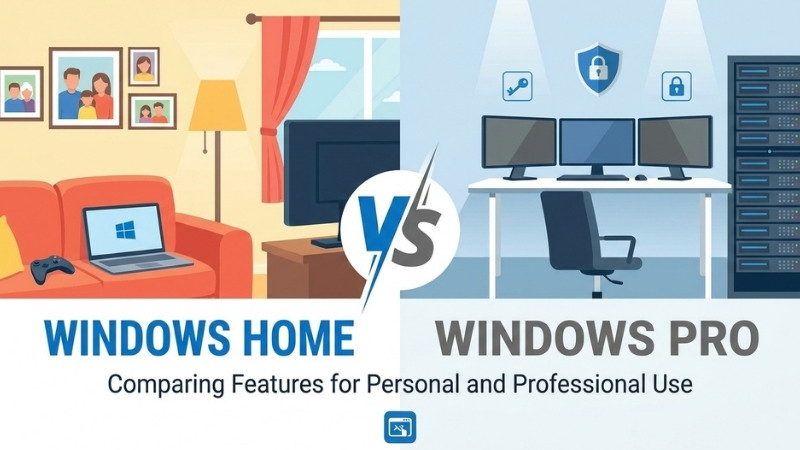
Understanding the Windows 11 Editions – Windows 11, the latest iteration of Microsoft’s operating system, introduces various editions tailored to different user requirements. Two prominent choices are the Home Single Language and Professional editions, each catering to distinct user scenarios.
Option 1 – Windows 11 Home Single Language
Windows 11 Single Language is designed with simplicity and accessibility in mind. It provides users with the core features essential for everyday computing tasks. This edition typically includes the fundamental elements required for smooth operation, making it suitable for general users, students, and home-based professionals.
However, no matter how convenient Windows Home might seem – especially since it comes ready to use straight out of the box – that convenience starts fading the moment your business needs even a little structure, security, or control. What works perfectly for personal use can quickly become a limitation in a work environment.
Option 2. Windows 11 Professional
Windows 11 Professional, on the other hand, caters to a more sophisticated user base with advanced computing needs. It is equipped with features that enhance security, productivity, and management capabilities, making it an ideal choice for business environments and power users.
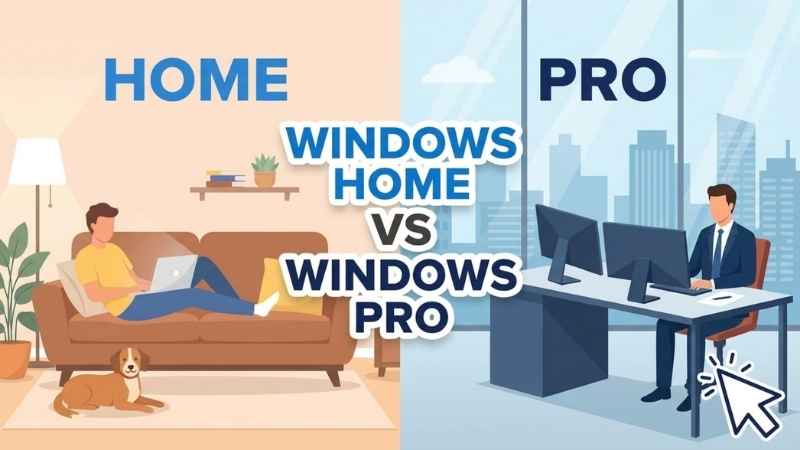
Here are the key reasons why Windows Pro is the smarter choice when you’re thinking beyond just one user and planning for a business setup.
Cost – Cheap Now vs Smart Later
Windows Home Single Language is cheaper. No surprises there. It’s bundled into the laptop cost, which makes it feel “free” (it’s not, but let’s not ruin that illusion).
Windows Pro, on the other hand, is a paid upgrade. That extra cost often makes SMB owners hesitate. Here’s the blunt truth – if you’re running even a 5–10 employee setup, skipping Pro to save a few thousand rupees per device is like buying office chairs and skipping the wheels. Technically usable, practically painful. You’re not paying for Pro because it looks cooler. You’re paying for control, security, and scalability.
Domain Join, Entra ID & Active Directory
This is where Windows Home taps out completely. Windows Pro allows devices to join:
- Traditional Active Directory (on-prem servers)
- Microsoft Entra ID (cloud-based identity)
Why does this matter? Because this is how businesses manage users, permissions, passwords, and access centrally. With Windows Home, every laptop is basically its own island. Each user has local accounts, separate passwords, and zero centralized control.
With Pro, your entire company can be managed like a system instead of a collection of random machines. One employee leaves? Disable access in one place. Done.
Group Policy & Assigned Access
Windows Pro gives you access to Group Policy Editor. Sounds boring, but it’s insanely powerful. You can:
- Restrict USB usage
- Disable control panel access
- Enforce password policies
- Lock systems to specific apps (Assigned Access or kiosk mode)
Windows Home? None of this. Users get full freedom… which sounds great until someone installs “Free PDF Converter.exe” and your system starts mining crypto.
MDM Control & Remote Wipe
With Windows Pro, you can connect devices to MDM solutions like Microsoft Intune. This allows:
- Remote device configuration
- App deployment
- Security enforcement
- And most importantly – Remote Wipe
Let’s say an employee loses a laptop. With Pro + MDM, you can erase company data remotely. With Home, your only option is… hope the person who finds it is morally strong. Good luck with that.
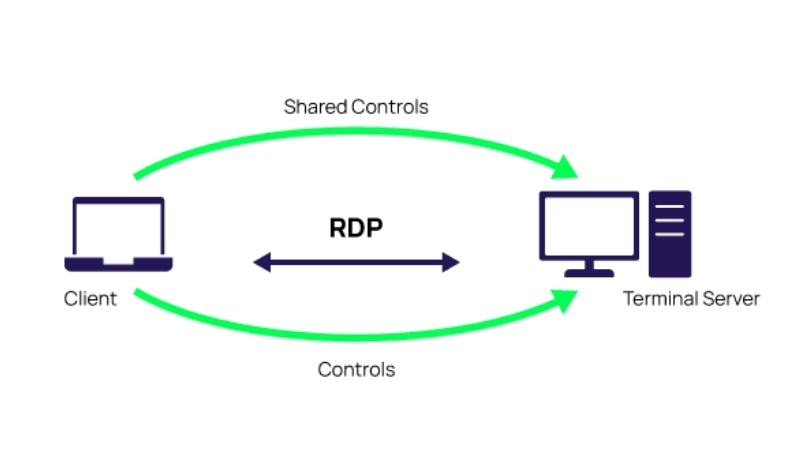
Remote Desktop (RDP) – Not Just Screen Sharing
This one is massively misunderstood. Windows Pro allows your machine to act as a Remote Desktop host. That means you can access your office PC from home, exactly as if you’re sitting in front of it. It’s not like TeamViewer or AnyDesk where you depend on third-party apps. This is built-in, secure (when configured right), and reliable.
Windows Home? It can only connect to another machine. It cannot be accessed remotely. So if you’re planning remote work setups – Home won’t cut it.
Virtualization – Hyper-V, Sandbox & Testing Environments
Windows Pro gives you built-in virtualization tools like Hyper-V and Windows Sandbox, which are extremely useful in a business environment.
Hyper-V allows you to create and run virtual machines, meaning you can operate multiple operating systems on a single device. This is particularly helpful for testing applications, running older or legacy software, or simulating different environments without affecting your main system.
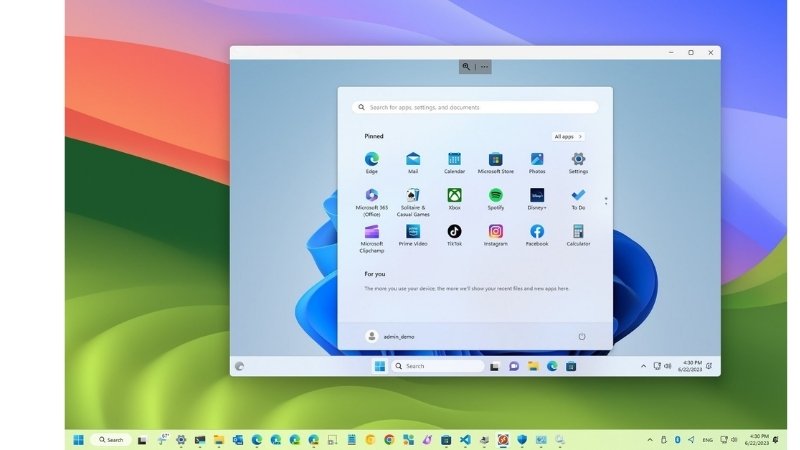
Windows Sandbox, on the other hand, provides a temporary and isolated version of Windows where you can safely open unknown files or test risky software, knowing that everything gets wiped clean after use.
Windows Home does not offer these capabilities, limiting your ability to test and secure your workflows effectively.
RAM & Processor Limits – Hidden Bottlenecks
Windows Home supports up to 128 GB of RAM and 1 CPU socket, whereas Windows Pro supports up to 2 TB of RAM and 2 CPU sockets. For a typical home user, 128 GB is already overkill, so this limitation rarely shows up. But in a business environment, especially where systems are used for virtualization, heavy multitasking, or data-intensive workloads, these limits become very real constraints.
Buying powerful hardware and pairing it with Windows Home is like putting a Ferrari engine in a car with a speed limiter.
Windows Update Control
Windows Home is pretty aggressive with updates. You get limited control. You can pause updates, but only for a short period. Windows Pro gives you significantly more flexibility:
- Defer feature updates
- Pause updates for longer durations
- Better control via Group Policy
For businesses, this matters because updates can break drivers, apps, or workflows. Home updates when Microsoft feels like it. Pro updates when you allow it. Big difference.
Security – BitLocker
Windows Pro includes BitLocker. This encrypts your entire drive. If a laptop is stolen, the data remains inaccessible. Windows Home either lacks this or provides only limited device encryption depending on hardware. For any business handling sensitive data – client info, financials, internal docs – not having BitLocker is a serious risk.
OOBE (Out-of-Box Experience)
Windows Pro allows better flexibility during initial configuration:
- Domain or Entra ID setup right from the start
- Business-focused provisioning
Windows Home is designed for individual consumers:
- Forces Microsoft account login
- Limited enterprise setup options
It’s not a deal-breaker, but it reinforces one thing clearly – Home is built for individuals, Pro is built for organizations.
Scalability – Don’t Paint Yourself Into a Corner
Here’s the good part. You can upgrade from Windows Home to Pro anytime. So technically, you can start with Home and upgrade later.
But here’s the catch – migrations, reconfigurations, and policy setups become more painful once systems are already in use. It’s like wiring your office after moving in. Possible? Yes. Smart? Not really.
Final Thought – What Should You Actually Choose?
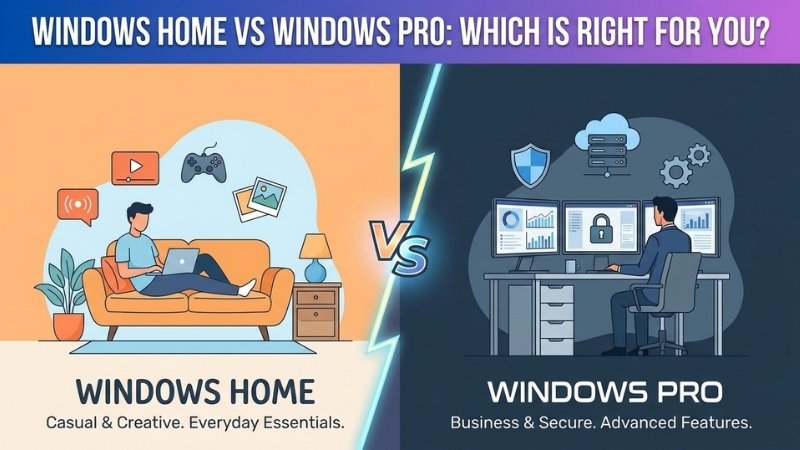
If you’re a solo user or using a laptop purely for basic work, Windows Home is fine.
But if you’re running a business, managing employees, handling data, or planning to scale – Windows Pro is not optional. It’s infrastructure. Simple as that. If you know your business will grow, starting with Pro saves you future headaches.
If you’re unsure which version fits your setup, or you’re already dealing with a mix of Home and Pro systems and things are getting messy, this is exactly where we come in. Reach out, and we’ll make sure your IT setup actually supports your business instead of slowing it down.
About Nurture IT
Nurture IT, one of the leading IT service providers in Bangalore offers customized scalable technology solutions specifically designed for our client’s unique needs.
As a preferred partner to technology leaders like Lenovo, Dell, Apple, HP, Asus, Tata, Google, Microsoft, Cisco, Sophos, Jamf, Soti, Fortinet, Poly, Octa, Seclore, Seqrite – we deploy the most advanced business technology solutions to ensure optimal reliability, productivity, and value.
Our B2B branch, Nurture IT, adeptly serves corporate and scaling-up demands. Conversely, for those not anticipating immediate growth, our Retail division – Laptop World caters to your specific needs.