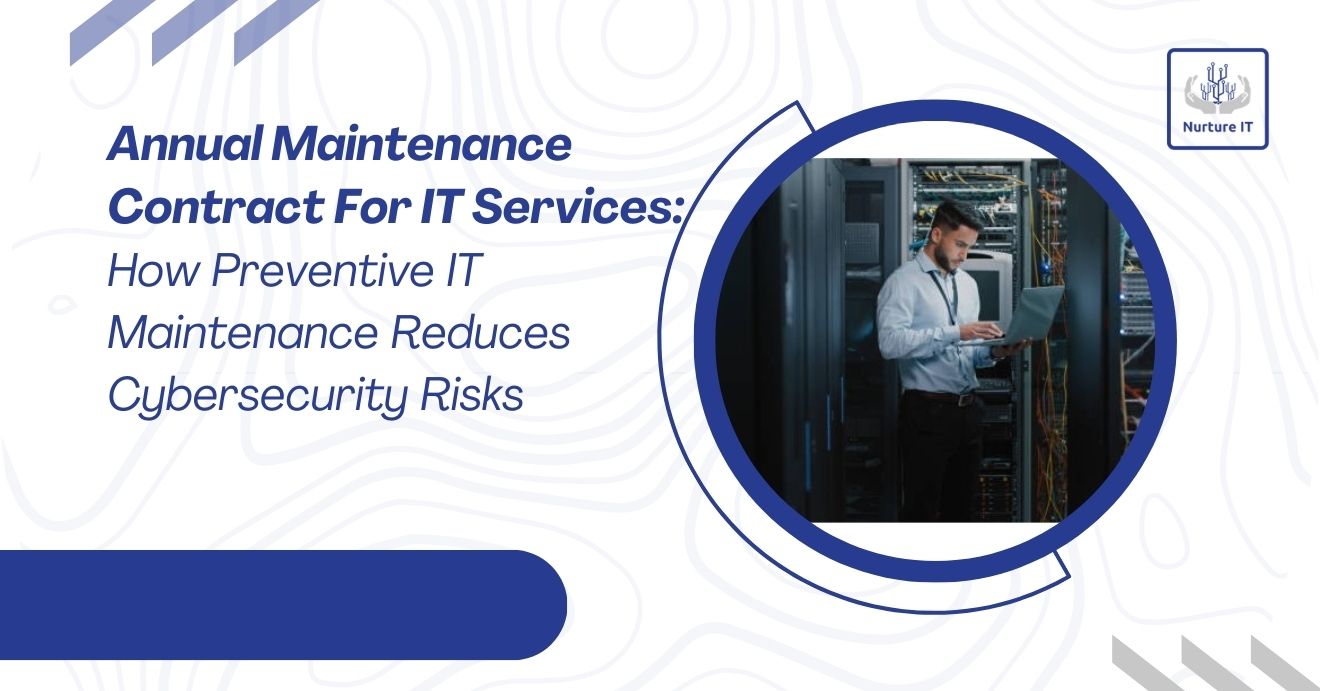
How Preventive IT Maintenance Reduces Cybersecurity Risks
Cybersecurity threats have evolved rapidly, targeting not only large enterprises but also small and mid-sized organizations. While advanced security tools and firewalls play a role, many breaches still occur due to neglected systems, outdated software, and poor infrastructure oversight. This is where preventive IT maintenance becomes a critical line of defense.
An annual maintenance contract for IT services provides structured, proactive system care that reduces vulnerabilities before attackers can exploit them. Rather than reacting after an incident, organizations that invest in preventive maintenance create a stronger, more resilient IT environment.
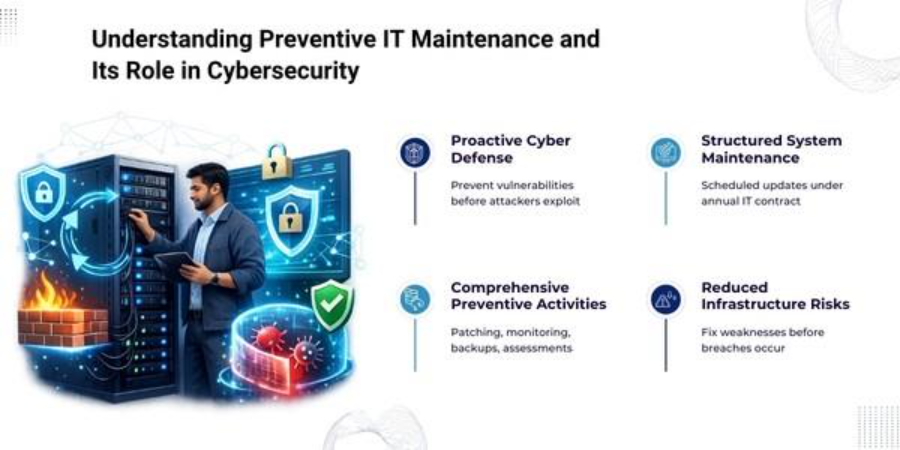
What Is Preventive IT Maintenance?
Preventive IT maintenance refers to routine, planned activities designed to keep IT systems operating reliably and securely. These activities include software updates, hardware inspections, network monitoring, backup testing, and vulnerability assessments.
When delivered under an annual maintenance contract for IT services, preventive maintenance follows a documented schedule and standardized procedures. This consistency helps organizations reduce operational gaps that often lead to cybersecurity incidents.
Unlike break-fix models, preventive maintenance focuses on early detection and system stability rather than post-incident recovery.
Why Cybersecurity Risks Increase Without Preventive Maintenance
Cyberattacks frequently succeed due to basic infrastructure weaknesses rather than advanced hacking techniques. Common risk factors include:
- Unpatched operating systems and applications
- Expired security certificates
- Misconfigured firewalls or access controls
- Unsupported legacy hardware
- Inactive monitoring of system logs
Without regular maintenance, these issues accumulate quietly until they result in data breaches, ransomware attacks, or prolonged downtime.
Preventive IT maintenance addresses these gaps continuously, reducing the likelihood of unnoticed vulnerabilities.
How Preventive IT Maintenance Reduces Cybersecurity Risks
1. Regular Patch Management
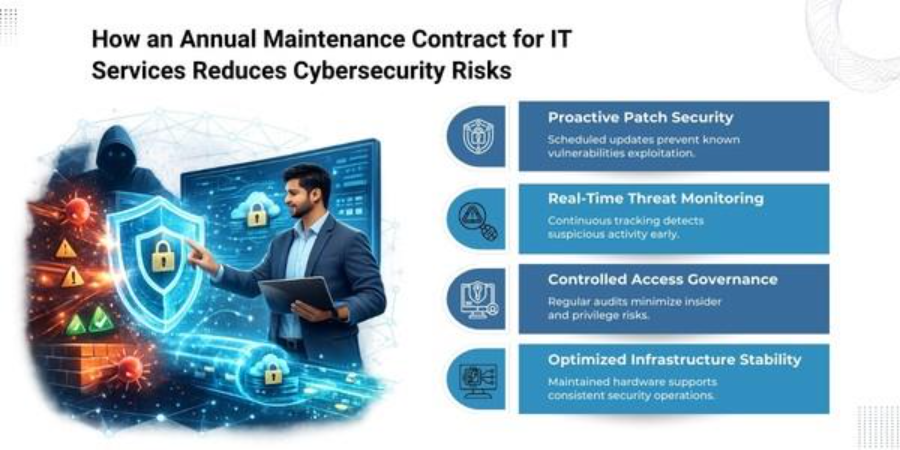
Most cyberattacks exploit known vulnerabilities for which patches already exist. Preventive maintenance includes scheduled patching for operating systems, applications, firmware, and network devices.
An annual maintenance contract for IT services typically covers patch verification, compatibility checks, and deployment planning. This structured approach lowers exposure to widely exploited security flaws.
2. Continuous System Monitoring
Preventive maintenance involves active monitoring of servers, endpoints, and networks. Monitoring tools detect unusual activity such as unauthorized login attempts, abnormal traffic spikes, or unexpected system behavior.
Early detection allows IT teams to intervene before minor anomalies escalate into full-scale breaches.
3. Access Control and Privilege Reviews
Excessive user permissions increase the damage potential of compromised accounts. As a result, preventive maintenance includes routine audits of user access levels, administrator privileges, and authentication mechanisms.
These reviews reduce insider threats and limit lateral movement if an account is compromised.
4. Hardware Health and Firmware Updates
Failing hardware can disrupt security controls, logging systems, and backups. Therefore, preventive maintenance checks server health, storage performance, cooling systems, and firmware versions.
Well-maintained hardware supports consistent security operations and reduces unplanned outages that attackers may exploit.
Role of an Annual Maintenance Contract for IT Services in Cybersecurity
An annual maintenance contract for IT services formalizes preventive activities and defines accountability. Instead of relying on ad-hoc fixes, organizations receive ongoing support backed by service-level commitments.
Key cybersecurity-related benefits include:
- Scheduled vulnerability assessments
- Documented maintenance procedures
- Predictable response timelines
- Centralized reporting and compliance support
- Reduced dependency on emergency interventions
This long-term approach aligns IT operations with business continuity and risk management objectives.
Preventive IT Maintenance vs Reactive IT Support
| Aspect | Preventive IT Maintenance | Reactive IT Support |
| Security posture | Proactive risk reduction | Issue-driven response |
| Vulnerability exposure | Lower due to routine updates | Higher due to delayed fixes |
| Downtime frequency | Planned and minimal | Sudden and disruptive |
| Cost predictability | Stable under annual contracts | Unpredictable incident costs |
| Compliance readiness | Ongoing documentation | Last-minute remediation |
The table highlights how preventive strategies provide measurable cybersecurity advantages over reactive approaches.
Business Continuity and Data Protection
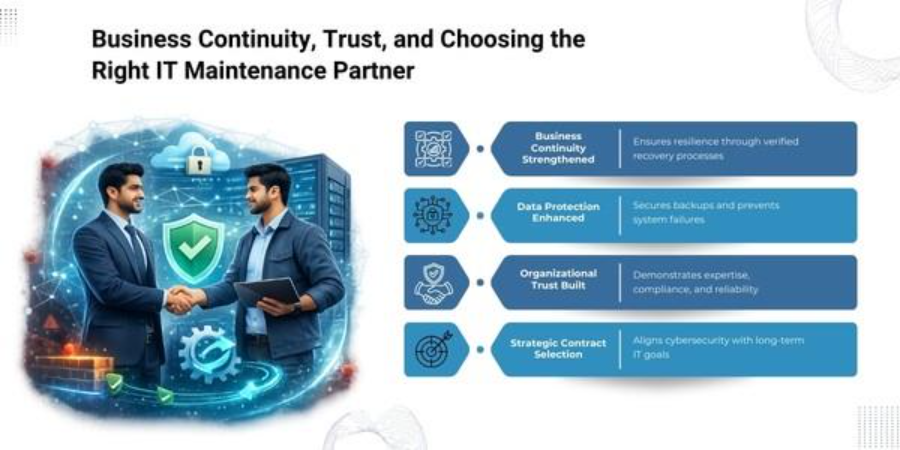
Cybersecurity incidents often result in extended downtime, lost revenue, and reputational damage. Preventive IT maintenance supports business continuity by:
- Verifying backup integrity
- Testing disaster recovery processes
- Monitoring system performance trends
- Identifying single points of failure
These activities reduce the operational impact of cyber incidents and help organizations recover faster if disruptions occur.
Why Preventive Maintenance Builds Trust
Experience
Organizations that implement preventive IT maintenance gain real-world operational insights into system behavior, risks, and performance patterns over time.
Expertise
Preventive maintenance is typically managed by trained IT professionals who understand evolving threat landscapes, patch dependencies, and infrastructure design.
Authoritativeness
Documented maintenance processes and consistent reporting position organizations as mature and security-conscious in the eyes of partners, auditors, and clients.
Trustworthiness
Regular maintenance builds predictable system behavior, reduces surprise failures, and supports transparent security practices.
Choosing the Right Annual Maintenance Contract for IT Services
When selecting an IT maintenance partner, organizations should evaluate:
- Scope of cybersecurity coverage
- Frequency of updates and audits
- Monitoring tools and alert mechanisms
- Reporting and documentation practices
- Incident response coordination
A well-structured annual maintenance contract for IT services integrates preventive maintenance with cybersecurity strategy rather than treating them as separate functions.
How Nurture IT Supports Your Cybersecurity
Nurture IT in Indiranagar goes beyond standard measures to strengthen your organization’s cybersecurity.
Access Management: Nurture IT offers Identity Access Management (IAM) solutions to manage digital identities, assign user roles, and implement Multi-Factor Authentication (MFA) for secure access.
Our firewalls, whether physical, cloud-based, or device-specific, control network traffic, while VPN solutions provide encrypted connections for safe remote access. Active Directory services streamline authentication, access controls, and group policy management.
Data Management: We implement robust backup strategies following the 3-2-1 rule and WORM policies to protect critical data. Information Rights Management (IRM) restricts access to authorized personnel. In the event of a cyberattack, Nurture IT helps create recovery plans that restore systems and data quickly, reducing operational disruptions.
Data Protection: Advanced Endpoint Protection Platforms (EPP), antivirus solutions, and USB blocking guard against malware and cyber threats. Mobile Device Management (MDM) secures corporate devices, while Data Loss Prevention (DLP) technologies monitor and prevent unauthorized data access or leaks.
With Nurture IT, organizations can strengthen digital defenses, protect valuable information, and respond swiftly to cyber threats.
Final Thoughts
Cybersecurity is no longer just about reacting to incidents; it’s about preventing them before they disrupt operations, compromise data, or damage trust. Preventive IT maintenance plays a critical role in reducing cybersecurity risks by addressing vulnerabilities early, maintaining system health, and supporting long-term business continuity. By adopting an annual maintenance contract for IT services, organizations gain structured oversight, predictable support, and continuous risk reduction across their IT infrastructure.
Nurture IT in Indiranagar helps organizations move beyond reactive IT management with comprehensive preventive maintenance and cybersecurity-focused support. From access control and data protection to backups and recovery planning, we deliver reliable IT services that reduce risk and support business growth.
Partner with us today to build a resilient, secure, and future-ready IT environment.
FAQs
1. What is an annual maintenance contract for IT services?
An annual maintenance contract for IT services is a long-term agreement that covers routine IT maintenance, monitoring, updates, and support throughout the year.
2. How does preventive IT maintenance reduce cybersecurity risks?
Preventive maintenance reduces risks by addressing vulnerabilities early through patching, monitoring, access reviews, and system health checks.
3. Is preventive IT maintenance suitable for small and mid-sized businesses?
Yes, businesses of all sizes benefit from preventive maintenance, as cyber threats often target organizations with limited IT oversight.
4. What services are typically included in preventive IT maintenance?
Common services include patch management, system monitoring, backup verification, hardware checks, and access control reviews.
5. How does preventive maintenance differ from break-fix IT support?
Preventive maintenance focuses on ongoing risk reduction, while break-fix support responds only after problems occur.