10 Signs Your Business Needs an IT Infrastructure Upgrade
Today, technology is the backbone of nearly every operation. From communication and customer service to data management and cybersecurity, organizations depend on reliable systems to remain productive and competitive. However, many companies continue to operate on outdated hardware, software, and networks long after they have reached their optimal lifespans.
An aging IT environment can quietly reduce efficiency, increase security risks, and create unnecessary operational costs. Therefore, recognizing the warning signs early can help businesses make strategic improvements before technology issues begin affecting customers and revenue.
This is where professional IT infrastructure services become valuable. They help organizations modernize their technology environment, improve performance, and support long-term growth.
In this blog, we’ll discuss the ten most common signs that indicate your business may need an IT infrastructure upgrade.
What Is IT Infrastructure?
IT infrastructure refers to the collection of hardware, software, networks, data centers, cloud resources, and security systems that support business operations.
Typical components include:
- Servers
- Computers and workstations
- Network equipment
- Cloud platforms
- Data storage systems
- Cybersecurity solutions
- Business applications
- Communication tools
When these components become outdated or inefficient, they can affect productivity, security, and scalability.
Quick Overview: Signs Your IT Infrastructure Needs an Upgrade
1. Frequent System Downtime
One of the clearest indicators that your infrastructure needs attention is repeated system outages.
When servers, networks, or business applications become unavailable, employees cannot perform their tasks efficiently. Downtime can affect:
- Customer service
- Sales operations
- Internal communication
- Financial transactions
- Data access
Even short interruptions can result in significant productivity losses.
Modern IT infrastructure services help organizations replace outdated systems, introduce redundancy, and improve overall reliability.
Warning Signs
- Unexpected server crashes
- Repeated application failures
- Network outages
- Unscheduled maintenance interruptions
2. Slow Network and Application Performance
Technology should accelerate business operations, not slow them down.
If employees frequently complain about slow systems, delayed file transfers, or lagging applications, your infrastructure may be struggling to keep up with current workloads.
Common causes include:
- Aging hardware
- Insufficient bandwidth
- Legacy network architecture
- Overloaded servers
Slow performance affects employee productivity and can create frustration throughout the organization.
Business Consequences
- Longer task completion times
- Reduced collaboration
- Lower employee satisfaction
- Delayed customer responses
Also Read: How Much Does IT Infrastructure Setup Cost for Startups in India (2026 Guide)
3. Rising IT Maintenance Costs
Older systems typically require more frequent repairs and maintenance.
At first, patching aging equipment may seem less expensive than upgrading. However, over time, maintenance costs often exceed the cost of modernization.
If your IT budget is increasingly spent on:
- Hardware repairs
- Emergency support
- Replacement parts
- Legacy software maintenance
It may be time to evaluate a complete infrastructure refresh.
A modern infrastructure often reduces support requirements while improving overall performance.
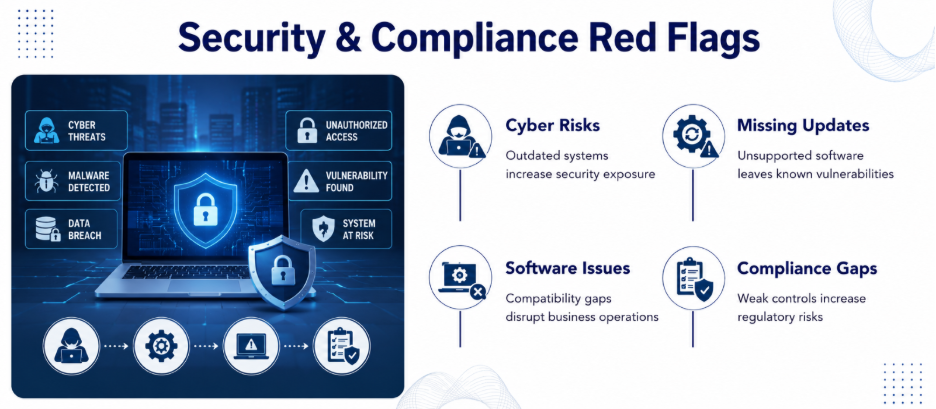
4. Increased Cybersecurity Risks
Cybersecurity threats continue to evolve every year.
Outdated infrastructure frequently lacks modern security features needed to protect sensitive business information.
Older systems may:
- No longer receive security updates
- Support outdated encryption protocols
- Contain known vulnerabilities
- Have limited monitoring capabilities
Cybercriminals often target businesses using unsupported software because these systems are easier to exploit.
Common Security Warning Signs
- Frequent malware incidents
- Unpatched software
- Unsupported operating systems
- Increasing phishing attacks
Organizations that invest in updated IT infrastructure services can implement stronger security controls, modern endpoint protection, and advanced monitoring tools.
5. Storage Capacity Is Running Out
Data growth is accelerating across every industry.
Customer records, operational documents, multimedia content, analytics data, and application information all require storage resources.
When storage systems approach capacity limits, businesses may experience:
- Slower system performance
- Difficulty accessing files
- Increased risk of data loss
- Higher backup complexity
Modern infrastructure solutions provide scalable storage options through cloud and hybrid environments.
Questions to Ask
- Are employees constantly deleting files to free space?
- Are backups taking longer than expected?
- Is storage expansion becoming difficult?
If the answer is yes, an upgrade may be necessary.
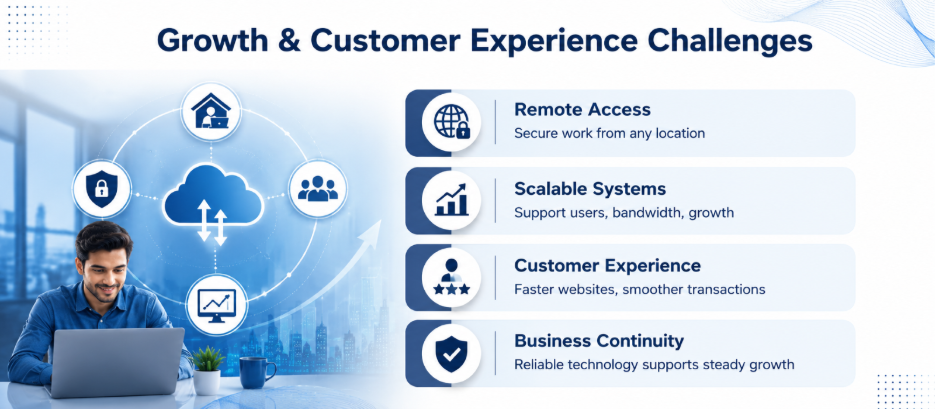
6. Remote Work Technology Is Struggling
Hybrid and remote work have become permanent components of many business models.
Infrastructure originally designed for office-only operations may struggle to support remote employees effectively.
Signs include:
- Poor VPN performance
- Frequent connection issues
- Limited remote access capabilities
- Collaboration platform disruptions
Therefore, employees need secure and reliable access to business resources regardless of location.
Modern IT infrastructure services can help organizations adopt cloud-based solutions, secure access frameworks, and scalable collaboration platforms.
7. Software Compatibility Problems Are Increasing
Business software evolves continuously.
New applications often require updated operating systems, stronger processing capabilities, and modern network environments.
If your organization regularly encounters:
- Software installation failures
- Unsupported operating systems
- Integration challenges
- Application crashes
Your infrastructure may no longer support current business requirements.
Why This Matters
Technology limitations can prevent organizations from adopting innovative tools that improve efficiency and competitiveness.
As a result, businesses may fall behind competitors using newer technologies.
8. Your Infrastructure Cannot Scale with Business Growth
Growth is positive, but only if your technology can support it.
As businesses expand, they often require:
- More users
- Additional storage
- Higher bandwidth
- New applications
- Expanded cybersecurity controls
Legacy systems were frequently designed for a much smaller workforce and workload.
Signs of Scalability Issues
- Adding new employees is difficult
- System performance drops during peak periods
- Network congestion becomes common
- New locations are challenging to connect
Modern infrastructure enables organizations to scale resources as business demands change.
9. Customers Are Experiencing Technology-Related Issues
Customers often notice technology problems before leadership does.
Slow websites, delayed customer support responses, transaction failures, and service interruptions can all damage customer satisfaction.
Potential indicators include:
- Increased customer complaints
- Website performance issues
- Longer support wait times
- Failed online transactions
Poor technology performance can directly affect revenue and brand reputation.
Businesses that invest in upgraded infrastructure can deliver faster, more reliable customer experiences.
10. Compliance and Regulatory Requirements Are Becoming Difficult to Meet
Many industries operate under strict regulations related to data protection, privacy, and cybersecurity.
Examples include:
- Healthcare
- Finance
- Government bodies
Outdated infrastructure may lack the capabilities needed to support modern compliance obligations.
Compliance Challenges Often Include
- Inadequate access controls
- Weak audit trails
- Insufficient encryption
- Limited monitoring capabilities
An infrastructure upgrade can help organizations improve governance and reduce regulatory risks.
Also Read: How to Audit Your IT Infrastructure Support System: A Practical, Step-by-Step Guide
Benefits of Upgrading Your IT Infrastructure
Investing in modern IT infrastructure services provides advantages that extend beyond technology performance.
Improved Productivity
Employees spend less time dealing with system issues and more time focusing on business objectives.
Enhanced Security
Modern infrastructure includes advanced security features designed to address the modern threat landscape.
Better Scalability
Organizations can expand operations without major technology disruptions.
Reduced Operational Costs
Modern systems often require less maintenance and consume fewer resources.
Stronger Business Continuity
Improved backup, disaster recovery, and redundancy capabilities reduce operational risks.
Better Customer Experience
Reliable technology helps businesses deliver faster and more consistent service.
How to Plan an IT Infrastructure Upgrade
Before making major technology investments, businesses should conduct a comprehensive infrastructure assessment.
Key steps include:
- Evaluate current systems.
- Identify performance bottlenecks.
- Review security risks.
- Assess future business requirements.
- Develop a modernization roadmap.
- Prioritize critical upgrades.
- Implement upgrades in phases.
Working with experienced providers, like Nurture IT in Indiranagar, can help organizations create a strategy aligned with both technical and business goals.
Final Thoughts
Technology plays a critical role in business success, but aging systems can create hidden obstacles that affect productivity, security, customer satisfaction, and growth. However, modern IT infrastructure services help businesses build reliable, secure, and scalable technology environments.
Get in touch with Nurture IT today and discover how the right IT infrastructure can drive efficiency, reduce operational risks, and position your business for sustained success.
FAQs
1. What are IT infrastructure services?
IT infrastructure services include the design, implementation, management, monitoring, maintenance, and optimization of an organization’s technology environment, including networks, servers, storage, cloud resources, and cybersecurity systems.
2. How often should businesses upgrade their IT infrastructure?
Most organizations evaluate infrastructure every 3–5 years, although specific components such as software and security tools may require more frequent updates.
3. What is the biggest risk of outdated IT infrastructure?
Cybersecurity vulnerabilities are among the biggest risks because unsupported systems may no longer receive vital security updates.
4. Can cloud migration be part of an infrastructure upgrade?
Yes. Many businesses modernize their infrastructure by adopting cloud or hybrid cloud environments to improve scalability and flexibility.
5. How do IT infrastructure upgrades improve productivity?
Modern systems reduce downtime, improve application performance, and provide employees with faster access to tools and information.