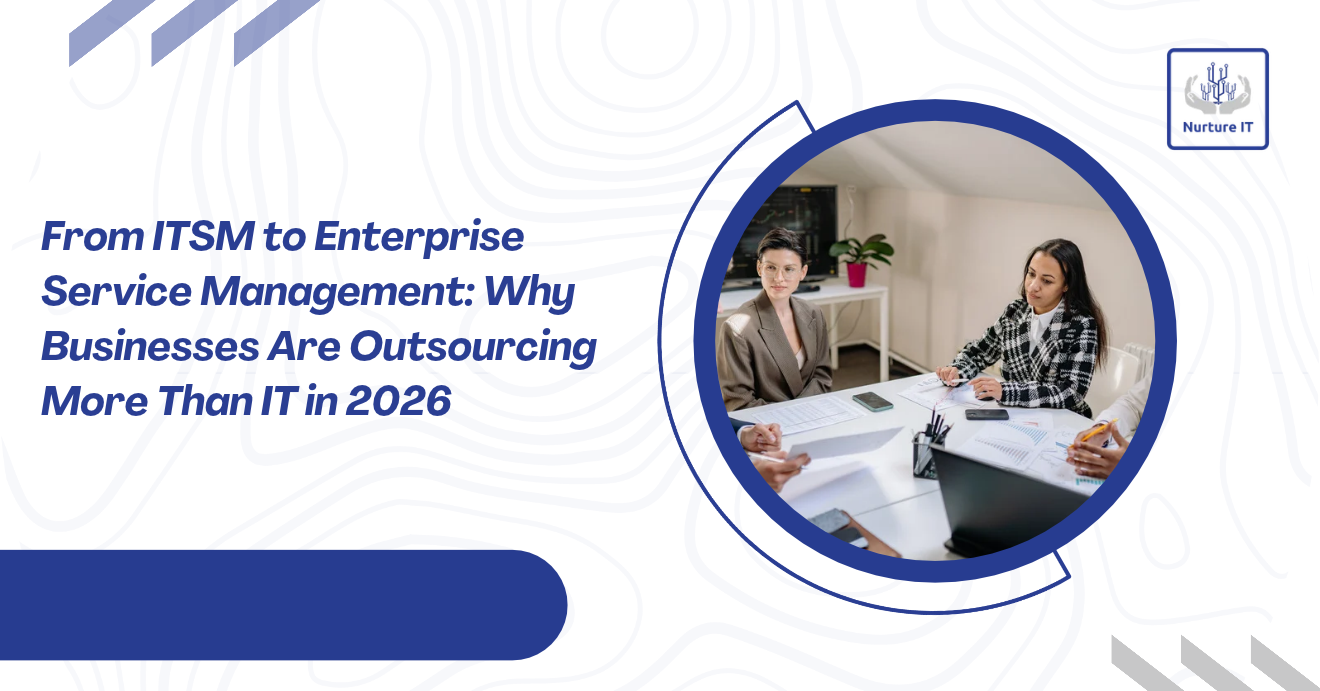
From ITSM to Enterprise Service Management: Why Businesses Are Outsourcing More Than IT in 2026
When an employee cannot access a business application, IT usually handles the problem. But what happens when the same employee needs a laptop, an employment letter, expense approval, and a workspace repair?
These requests often pass through different departments, email threads, and disconnected systems. The result is delays, repeated follow-ups, and limited visibility.
As a result, businesses in 2026 are moving past old-school IT support. They want consistent service delivery across departments. That’s why Enterprise Service Management (ESM) is having such a massive moment.
Likewise, IT service management outsourcing is also becoming part of this broader conversation. Instead of outsourcing only technical troubleshooting, businesses can explore external support for coordinated service delivery, infrastructure management, and repeatable operational workflows.
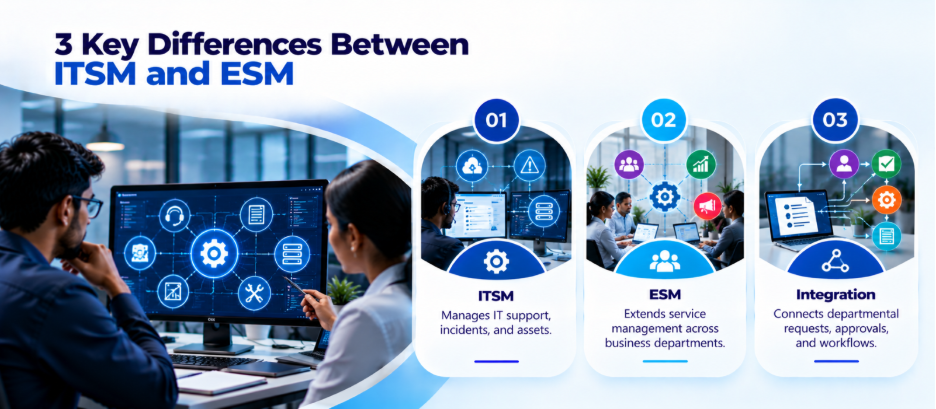
What Is the Difference Between ITSM and ESM?
IT Service Management (ITSM) focuses on planning, delivering, and managing IT services. Common activities include incident management, service requests, change management, and IT asset management.
Enterprise Service Management extends similar principles to other business functions. HR can manage employee requests, finance can track expense queries, and facilities teams can handle maintenance requests through structured workflows.
The distinction is straightforward:
- ITSM: Manages IT services and technology-related requests.
- ESM: Applies service management practices across multiple business departments.
For example, onboarding a new employee involves more than creating an email account. HR must complete documentation, IT must prepare devices and access permissions, and facilities may need to arrange a workstation.
An integrated workflow helps coordinate these tasks instead of relying on separate follow-ups.
Why Are Businesses Outsourcing More Than IT in 2026?
1. Disconnected Workflows Are Costing Time
A request can remain unresolved even when every department has capable employees. The problem may be unclear ownership, missing information, or manual handoffs.
Outsourcing selected operational services can help businesses establish documented processes, defined responsibilities, and consistent reporting.
For companies considering IT service management outsourcing, the opportunity is to address recurring service problems rather than increasing the number of support technicians.
2. Managing IT Infrastructure Requires Ongoing Attention
Businesses depend on working devices, reliable networks, secure access, and properly maintained systems. However, responsibilities get complicated as teams expand across offices or adopt hybrid mode.
An external IT partner can manage agreed responsibilities, including device support, network troubleshooting, maintenance, and asset tracking.
Explore our maintenance and support services to understand how structured maintenance can support day-to-day operations.
3. Internal Teams Need More Time for Strategic Work
When employees spend hours following up on routine requests, they have less time for activities that require specialist judgement.
Outsourcing repetitive support tasks can free internal teams to focus on business priorities. However, this works only when responsibilities, escalation procedures, and service expectations are clearly documented.
A provider should complement internal teams, not create another layer of coordination.
4. Automation Is Making Cross-Department Services More Practical
Modern service management platforms can automate ticket routing, approval notifications, status updates, and standard request workflows.
For example, an approved employee onboarding request can trigger tasks for HR, IT, and facilities. Each team retains responsibility for its part, while the overall process becomes easier to track.
However, automation does not remove the need for human decisions. Sensitive HR cases, financial exceptions, and security-related requests still require appropriate review and access controls.
Which Business Functions Can Benefit from ESM?
Businesses do not need to outsource every department to adopt enterprise service management. They can start with functions where requests are frequent, repeatable, and easy to measure.
- Human resources: Onboarding requests, employment letters, and employee policy queries.
- Finance: Expense queries, invoice processing requests, and approval tracking.
- Facilities: Workplace repairs, equipment requests, and office maintenance.
- Procurement: Purchase requests, supplier documentation, and approval workflows.
- IT: Helpdesk support, device provisioning, access requests, and incident management.
The right approach depends on your existing systems, data sensitivity, and operational needs.
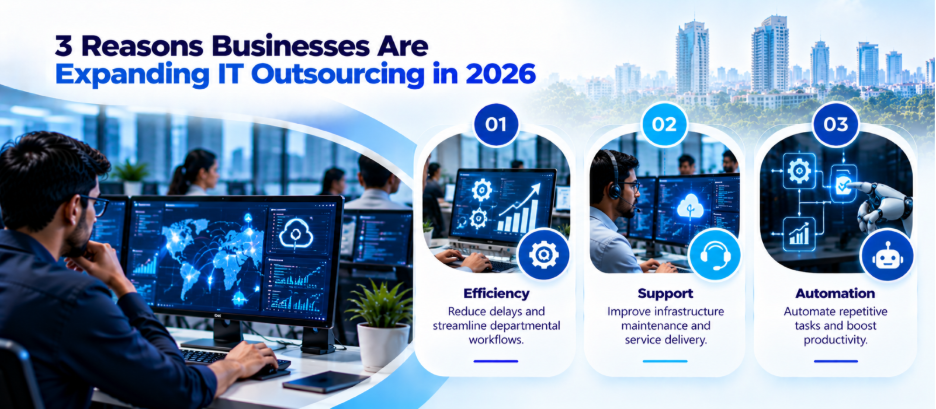
How to Choose the Right Outsourcing Partner?
Before expanding IT service management outsourcing into broader business operations, assess the provider against practical criteria.
1. Define ownership. Specify which activities the provider handles and which decisions your employees make.
2. Set measurable service levels. Track response times, resolution times, request backlogs, and recurring problems.
3. Review security controls. Check access permissions, data handling, confidentiality obligations, and incident reporting procedures.
4. Check integration requirements. Confirm whether the provider can work with your existing ticketing, HR, finance, and asset management systems.
5. Start with a pilot. Select one workflow, measure its performance before and after implementation, and expand only when the results justify it.
For businesses with infrastructure and connectivity requirements, our networking solutions offer another relevant area to review.
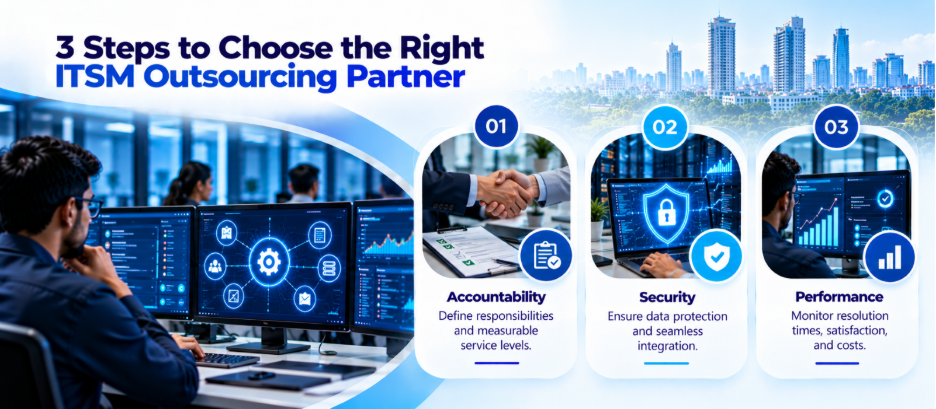
What Should Businesses Measure?
Do not judge an outsourcing arrangement solely by the number of tickets closed. Measure whether the service improves business operations.
Useful indicators include:
- Average request resolution time
- Percentage of requests resolved within agreed service levels
- Number of overdue or reopened tickets
- Employee satisfaction with support
- Cost per request or supported employee
- Frequency of recurring incidents
These metrics help identify whether the arrangement is meaningful or merely shifting work to an external provider.
Final Thoughts
The move from ITSM to ESM reflects a broader business need: employees expect reliable services regardless of which department handles their request.
IT service management outsourcing can provide a starting point for improving technical support, infrastructure maintenance, and operational consistency. Businesses can then extend structured workflows to other functions where it makes commercial sense.
Ready to streamline your IT operations? Get in touch with us!
FAQs
1. What is Enterprise Service Management?
Enterprise Service Management applies service management principles, workflows, and automation across departments like HR, finance, facilities, and IT.
2. How does ESM differ from ITSM?
ITSM focuses on IT services, while ESM extends structured service delivery practices to other business functions.
3. Why are businesses expanding outsourcing beyond IT in 2026?
Businesses want to reduce manual coordination, standardise recurring processes, improve service visibility, and give internal teams more time for strategic work.
4. What is IT service management outsourcing?
It involves engaging an external provider to manage agreed IT service activities, such as helpdesk support, incident handling, and IT infrastructure maintenance.
5. Can small businesses benefit from ESM?
Yes. Small businesses can start with a few high-volume workflows, such as employee onboarding, IT requests, or equipment procurement, without implementing an enterprise-wide platform immediately.