How Video Conferencing Technology is Transforming Modern Workspaces
A decade ago, workplace collaboration largely depended on physical presence. Teams gathered in conference rooms, client meetings involved travel, and remote work was an exception. Today, the workplace looks remarkably different. Employees collaborate across continents, executives conduct board meetings from different cities, and project teams stay connected regardless of location. And video conferencing solutions drive this entire transformation.
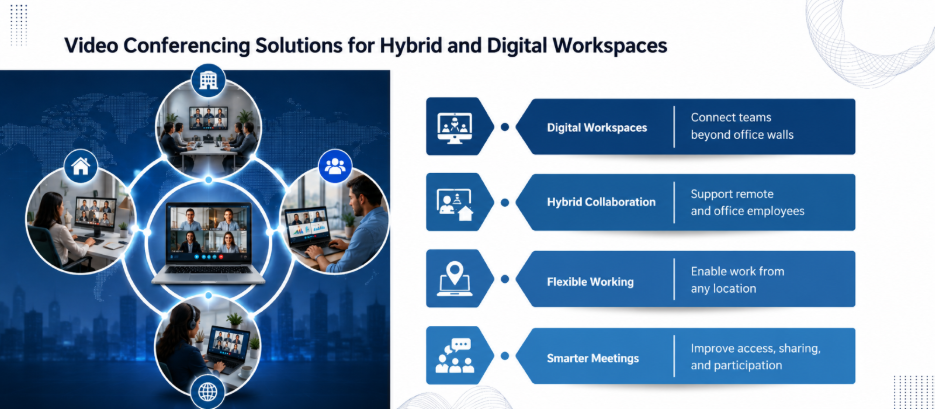
What began as a tool for virtual meetings has evolved into a core component of modern business infrastructure. Organizations now rely on video conferencing not only for communication but also for collaboration, training, customer engagement, recruitment, and decision-making. As businesses continue embracing hybrid and distributed work models, the role of video conferencing technology is becoming even more important.
From Meeting Rooms to Digital Workspaces
Traditional meeting rooms were once the primary location for discussions, brainstorming sessions, and strategic planning. However, modern organizations operate in environments where teams may be spread across multiple offices, countries, or time zones.
Video conferencing technology has effectively expanded the workplace beyond physical walls. Employees can now participate in discussions, presentations, and workshops from virtually anywhere with an internet connection.
This shift has changed how organizations view workspaces. Instead of being defined by a physical office, the modern workspace is defined by digital connectivity. The result is greater flexibility for employees and broader access to talent for employers.
Driving the Rise of Hybrid Work
Hybrid work has become a workplace trend in recent years. Many organizations have adopted models where employees split their time between home and office environments.
However, hybrid work would struggle to function without reliable video conferencing solutions.
Video conferencing platforms create a level playing field where remote and in-office employees can participate equally in meetings. Features like screen sharing, virtual whiteboards, chat, and meeting recordings help bridge the gap between physical and remote participants.
This accessibility allows businesses to maintain productivity while offering employees greater flexibility in how and where they work.
Also Read: Optimizing Remote Work with Secure IT Helpdesk Solutions
Accelerating Decision-Making
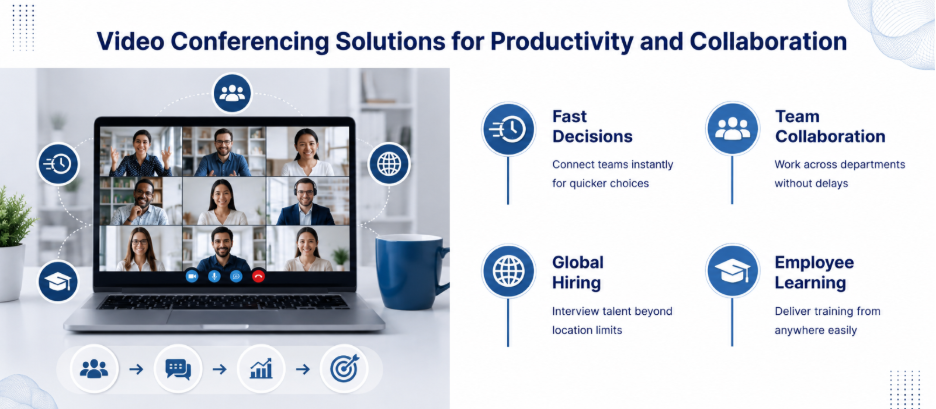
Business speed often depends on how quickly teams can communicate and make decisions.
In traditional workplace environments, scheduling meetings frequently involved coordinating travel, reserving conference rooms, and accommodating multiple schedules. These logistical challenges often delayed important discussions.
Video conferencing removes many of these barriers.
Now, leaders can instantly connect with stakeholders, gather feedback, review data, and make informed decisions without waiting for everyone to be physically present. This capability becomes particularly valuable during time-sensitive situations, like product launches, operational disruptions, or customer escalations.
The ability to convene key decision-makers within minutes has become a competitive advantage for many organizations.
Strengthening Cross-Functional Collaboration
Modern business challenges rarely belong to a single department. Marketing teams collaborate with sales, product teams work alongside customer support, and HR departments coordinate with business leaders.
Video conferencing technology makes cross-functional collaboration more efficient by bringing diverse teams together.
As a result, employees can share presentations, review documents in real time, and discuss projects without travel or a lengthy scheduling process. This increased connectivity encourages faster problem-solving and knowledge sharing across departments.
Expanding Access to Global Talent
Recruitment has undergone a big change due to video conferencing technology.
Previously, hiring often focused on candidates located near physical offices. Today, organizations can interview, assess, and onboard professionals from almost anywhere in the world.
Video conferencing solutions help businesses connect with specialized talent regardless of geographic boundaries. This broader talent pool helps companies address skill shortages and build more diverse teams.
Recruiters can conduct initial screenings, technical assessments, and final interviews without requiring candidates to travel. For many organizations, this flexibility has become a key factor in attracting top talent.
Enhancing Employee Learning and Development
Workplace learning has expanded beyond traditional classroom-based training.
Organizations now use video conferencing solutions to deliver onboarding sessions, leadership development programs, compliance training, and technical workshops.
Employees can participate in training sessions from any location while still engaging with instructors and peers. Interactive features like live discussions, polls, breakout rooms, and Q&A sessions create a more dynamic learning experience.
Recorded sessions provide an additional advantage by allowing employees to revisit important information when needed.
This accessibility supports continuous learning while reducing the costs associated with travel and physical training facilities.
Also Read: Guide to Setting Up Secure Home Office IT for Remote and Hybrid Teams
Improving Customer and Client Engagement
The impact of video conferencing extends beyond internal operations.
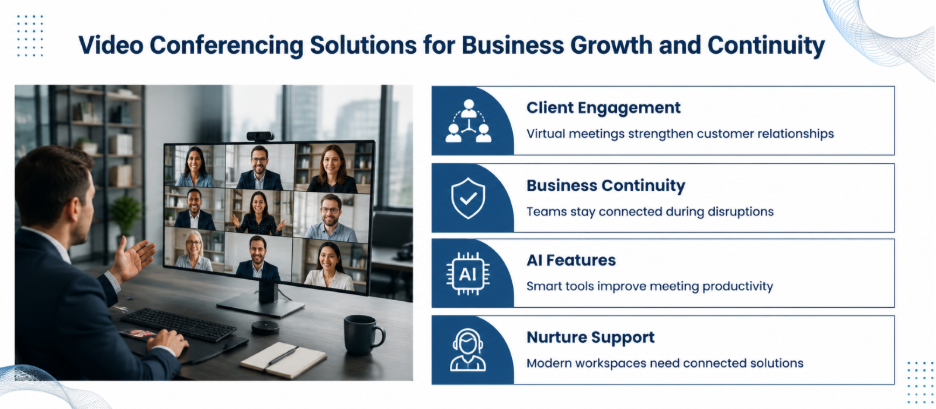
Businesses increasingly use video conferencing technology to engage with customers, partners, and clients. Sales presentations, product demonstrations, consulting sessions, and customer support interactions are now frequently conducted through virtual meetings.
For organizations serving clients across multiple regions, video conferencing provides a practical way to maintain strong relationships while reducing travel expenses.
Supporting Business Continuity
Unexpected disruptions can impact workplace operations. Natural disasters, transportation issues, public health emergencies, and other unforeseen events may limit access to physical offices.
Video conferencing solutions help organizations maintain continuity during such situations. Employees can continue collaborating, meeting, and supporting customers even when traditional workplace arrangements are disrupted. This resilience has become a key component of modern business planning.
The Growing Role of Intelligent Features
Video conferencing platforms are becoming increasingly sophisticated through the integration of artificial intelligence.
Modern systems can generate meeting transcripts, create summaries, reduce background noise, improve video quality, and provide real-time language translation in certain scenarios.
These capabilities help employees focus on discussions rather than administrative tasks.
As AI technology continues advancing, video conferencing platforms are expected to become even more intelligent and support greater productivity across diverse work environments.
Empower Your Modern Workspace with Nurture IT
At Nurture IT, we help businesses create connected, productive, and future-ready workspaces through integrated IT, telecom, security, and boardroom solutions.
From deploying high-performance video conferencing systems and collaboration tools to setting up smart meeting rooms and secure network infrastructure, we provide end-to-end solutions tailored to your workplace needs.
Whether you’re upgrading your conference rooms or transforming your workplace into a digitally connected environment, Nurture IT helps you create communication experiences that drive productivity and business growth.
Final Thoughts
The future workplace will likely be more distributed, flexible, and digitally connected. Physical offices will continue to play an important role, but they will coexist with remote and hybrid work models that depend heavily on digital collaboration tools.
In this evolving environment, video conferencing solutions will remain a foundational technology. Contact Nurture IT today to discover customized video conferencing solutions.
FAQs
1. Why are video conferencing solutions important for modern workplaces?
They help teams communicate efficiently, support remote and hybrid work models, reduce travel requirements, and enable faster collaboration across locations.
2. How do video conferencing solutions improve productivity?
By allowing instant communication, quicker decision-making, and seamless collaboration, employees can resolve issues faster and spend less time coordinating in-person meetings.
3. Can video conferencing support hybrid work environments?
Yes. Video conferencing technology allows remote and office-based employees to participate equally in meetings, discussions, and collaborative projects.
4. How do businesses use video conferencing for customer engagement?
Organizations use video conferencing for virtual consultations, sales presentations, product demonstrations, customer support, and client meetings.
5. What features should businesses look for in video conferencing solutions?
Key features include HD video, screen sharing, meeting recording, virtual whiteboards, chat functionality, security controls, and integration with business applications.