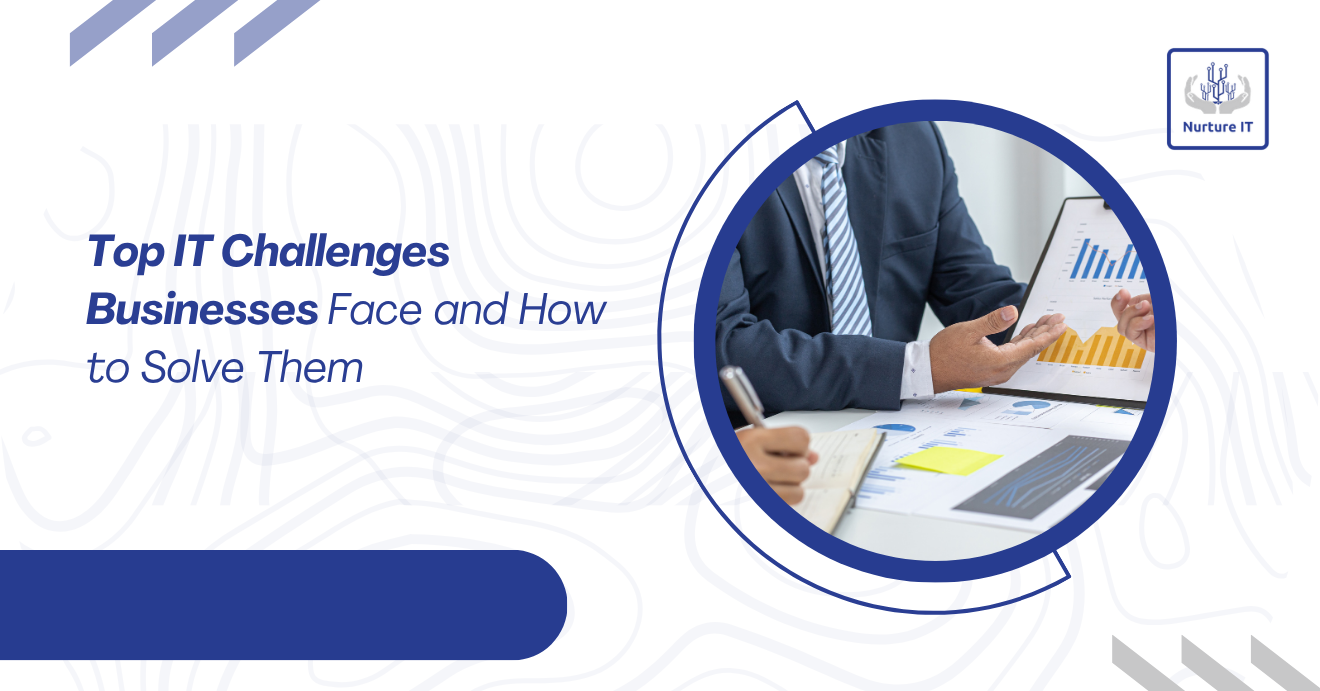
Top IT Challenges Businesses Face and How to Solve Them
Running a business today means running a technology operation, whether you planned for that role or not. Your team’s productivity, client experience, and data security all sit on top of an IT infrastructure that most business owners don’t think about until something breaks.
That’s exactly the problem.
The businesses that scale without chaos are the ones that treat IT as a strategic priority, not a fire to put out. That starts with understanding the challenges and getting the right IT consulting services in place.
Here are the six IT challenges that businesses encounter most, and what solving them actually looks like.
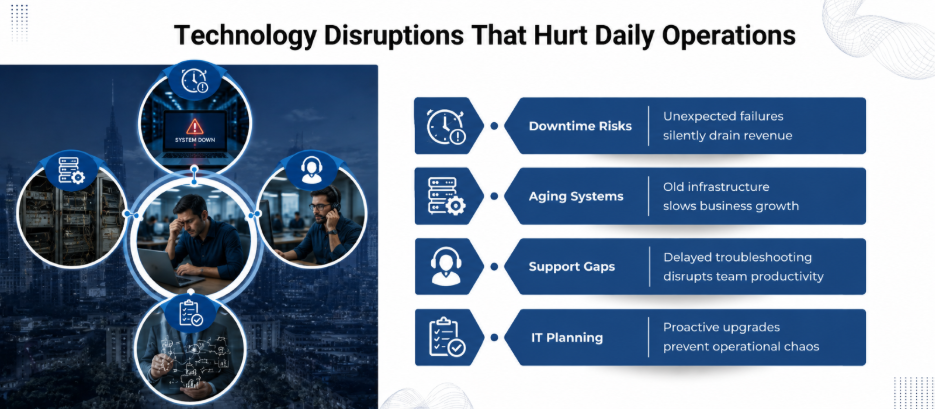
1. Unplanned Downtime: The Silent Revenue Drain
Downtime never announces itself. A server overloads, a network switch fails, or a software update goes sideways — and suddenly your team is sitting idle, clients can’t be served, and deadlines start slipping.
Effective downtime prevention isn’t reactive work. It’s a discipline built before anything breaks. It means proactive hardware health monitoring, scheduled maintenance windows, and redundancy systems that catch failures before they cascade.
Therefore, when you engage IT consulting services with predictive analytics, your team’s first sign of a problem is a dashboard alert, not an inbox full of “is the server down?” messages.
2. Cybersecurity
Ransomware attacks now deliberately target SMBs, specifically because smaller businesses often carry valuable data but maintain weaker defenses. Phishing emails have become convincingly indistinguishable from real communications. And with employees working on personal devices from home networks, the attack surface has grown without most businesses realizing it.
Cybersecurity is an ongoing practice that includes enterprise-grade network protection like Cisco Network Security Solutions, endpoint protection on every device your team uses, and regular employee training on recognizing threats.
Good IT consulting services build layered defenses rather than letting you discover the gaps after an attack.
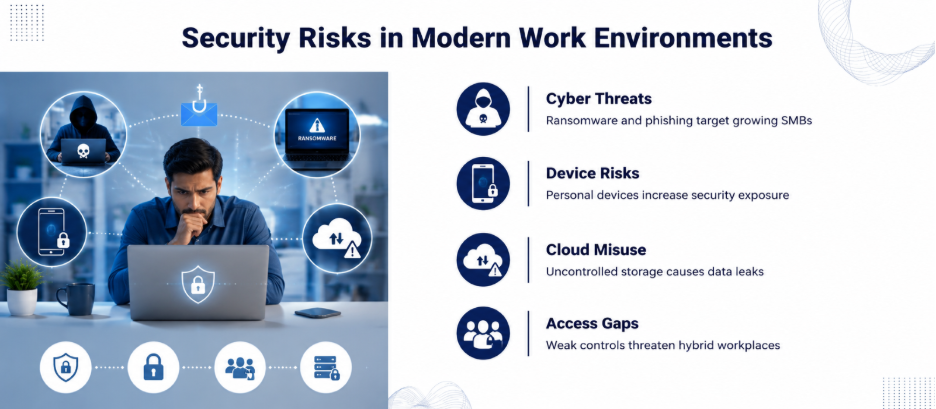
3. Hybrid Work Without Proper Digital Workplace Solutions
Most businesses set up remote work quickly in response to necessity. As a result, employees now connect on personal laptops over home routers, and company files sometimes end up in personal cloud storage. This is how quiet data leaks happen.
Building real digital workplace solutions means more than handing out laptops and a VPN link. It means mobile device management, endpoint monitoring, zero-trust access policies, and a cloud collaboration stack that genuinely works together without leaving gaps.
Structured IT consulting services help you deploy this infrastructure correctly from the start.
4. Outdated IT Infrastructure That Can’t Keep Up
An IT environment built for 20 people often falls apart at 80. Legacy servers strain under modern workloads. Onboarding new employees takes three days because every device is configured manually. Software integrations fail because the underlying systems were never designed to work together.
The worst part is that most businesses only discover this problem when they’re already feeling the drag. Therefore, you first have to notice the warning signs that it’s struggling to keep up. Upgrades forced by urgency are always more expensive and more disruptive than upgrades that are planned.
The right IT consulting services team audits your current setup, identifies the bottlenecks costing you the most, and builds a phased upgrade roadmap aligned to your growth.
5. No Reliable IT Troubleshooting When Teams Need It Most
Imagine your salesperson can’t access a CRM tool 15 minutes before a client call. They message IT. Nothing. They call. Voicemail. They improvise, and the call goes badly.
That’s a support structure failure with a business cost attached.
Slow or absent IT troubleshooting support forces workarounds that create both productivity losses and security exposure. Therefore, employees start saving files locally, using personal accounts, or skipping updates because no one guided them through the right process.
However, IT Helpdesk and Annual Maintenance Contract give businesses structured IT troubleshooting coverage. This is one of the most immediate and impactful improvements businesses can get from professional IT consulting services.
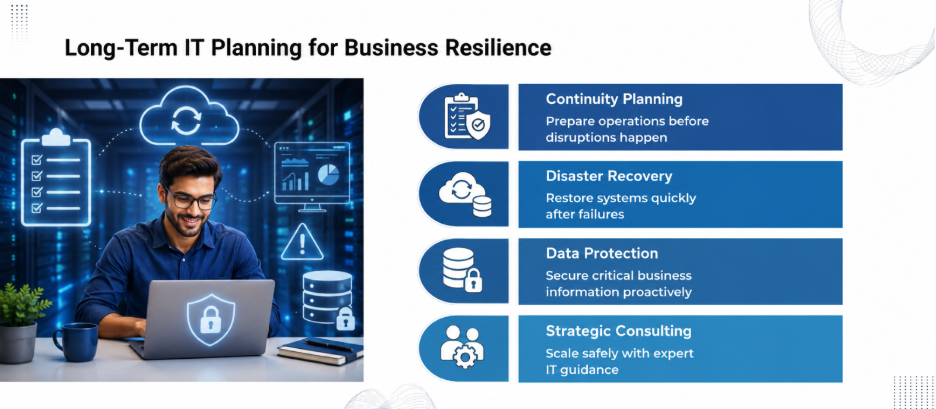
6. Business Continuity: The Plan Most Businesses Don’t Have
Ask a business owner what happens if ransomware locks every file on their network, or a flood damages the server room, and the most common answer is a pause followed by uncertainty.
Business continuity planning isn’t pessimism. It’s operational maturity. It means having tested backup systems, documented recovery procedures, and the ability to restore operations within a defined time window when something goes wrong.
Disaster recovery for SMBs addresses the specifics most IT plans miss. Experienced IT consulting services providers don’t just help you write these plans; they test them regularly so that when something does go wrong, business continuity is measured in hours, not weeks.
Final Thoughts
Most IT problems don’t require heroics. They require foresight and the right people paying attention before things break.
Whether you’re dealing with recurring downtime, patchy cybersecurity, a hybrid workforce without proper controls, or no recovery plan whatsoever, the path forward starts with an honest look at where your business stands today.
Nurture IT in Indiranagar provides IT consulting services to startups and growing SMBs across Bangalore, covering everything from managed helpdesks and cybersecurity to infrastructure upgrades and disaster recovery. Speak with the team directly.
FAQs
1. What are the biggest IT challenges businesses face today?
The most common IT challenges include unplanned downtime, cybersecurity threats, outdated infrastructure, hybrid work management, lack of reliable IT support, and inadequate business continuity planning.
2. Why is unplanned downtime so costly for businesses?
Unplanned downtime disrupts operations, reduces employee productivity, delays customer service, and can lead to lost revenue and damaged client relationships.
3. How can IT consulting services help prevent downtime?
IT consulting services implement proactive monitoring, preventive maintenance, redundancy systems, and predictive analytics to identify issues before they become major outages.
4. Why is reliable IT troubleshooting important?
Fast and effective IT troubleshooting minimizes downtime, prevents productivity losses, reduces security risks, and helps employees resolve technical issues without resorting to unsafe workarounds.
5. What is business continuity planning?
Business continuity planning involves creating strategies and processes that allow a business to continue operating and recover quickly after disruptions such as cyberattacks, hardware failures, or natural disasters.