10 IT Infrastructure Mistakes Growing Businesses in Bangalore Should Avoid
In Bangalore, the SMB ecosystem is expanding faster than most Indian cities can keep pace with. New offices open across Koramangala, Indiranagar, and Whitefield almost every month. However, IT infrastructure often gets treated as a side task in the rush to scale.
After watching dozens of founders and operations heads across the city navigate this, one thing is clear: the same avoidable mistakes derail otherwise solid growth plans, again and again. This mess happens when you make quick decisions without a real blueprint for IT infrastructure services in Bangalore. Below are ten mistakes that quietly cost growing businesses time, money, and credibility.
1. Treating IT Planning as an Afterthought
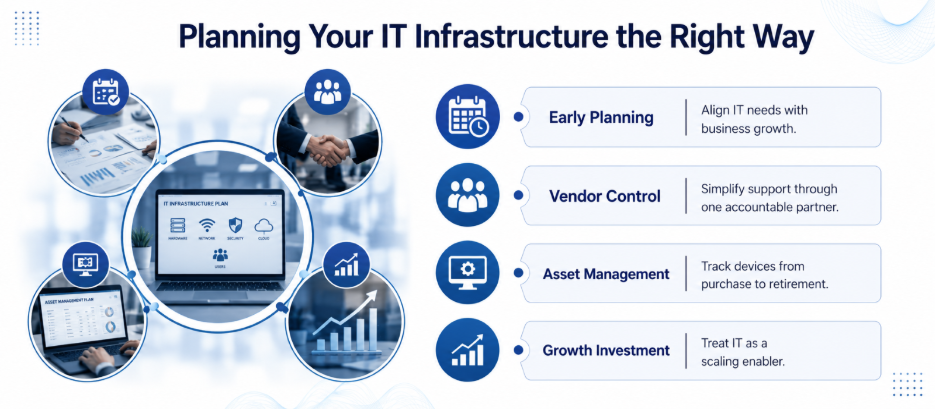
Many founders wait until they’ve signed a lease, hired ten people, and promised a launch date before thinking about laptops, networks, or software licenses. By then, procurement becomes a fire drill. Good IT infrastructure services in Bangalore start with a plan that maps hardware, connectivity, and security needs against your hiring roadmap, not a scramble after the fact.
2. Juggling Too Many Vendors
It’s common to see one vendor for laptops, another for networking, and a freelancer handling the server room, with nobody accountable when something breaks between them. This fragmented setup means longer downtime and finger-pointing when issues arise. However, choosing IT infrastructure services in Bangalore built around a single point of contact, who owns your entire stack from procurement to ongoing support, removes this friction almost entirely.
3. Ignoring Local Power Reliability Issues
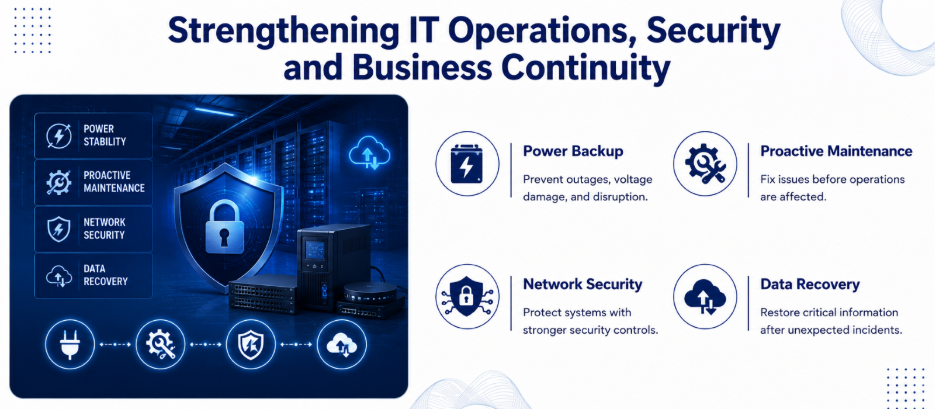
The power grid system in Bangalore is generally dependable but still experiences localized outages and voltage fluctuations, particularly during the monsoon months. Businesses that skip UPS systems, voltage stabilizers, or backup power for critical equipment risk losing work, corrupting data, or damaging hardware during a routine cut.
Therefore, redundant power planning belongs on the checklist for anything hosting servers or networking gear.
4. No Structured Asset Lifecycle Management
Laptops get issued informally, warranty details go untracked, and nobody knows which devices are due for replacement. This makes budgeting unpredictable and support slower than it needs to be. However, a proper asset management process, from initial purchase to final retirement, means no surprise expenses for management and zero waiting around for employees when their devices act up.
This is exactly what separates functional IT infrastructure services in Bangalore from setups that look fine on day one but fall apart under real growth.
5. Reactive Maintenance Instead of Proactive Support
Calling a technician only after a server crashes or the Wi-Fi drops is the most expensive way to run technology. Reactive fixes cost more, take longer, and tend to happen at the worst possible moment — during a client demo or a payroll run.
Growing companies get far more value from IT infrastructure services in Bangalore built on scheduled maintenance, rather than a break-fix arrangement.
6. Weak Network Security Fundamentals
Open guest Wi-Fi with no separation from the office network, routers still on default passwords, and no formal firewall policy are common findings during audits of growing companies. As headcount grows, so does the attack surface. Therefore, basic network security measures, including segmented networks, managed firewalls, and endpoint protection, should scale alongside the team instead of lagging behind it.
7. No Plan for Hybrid and Remote Asset Logistics
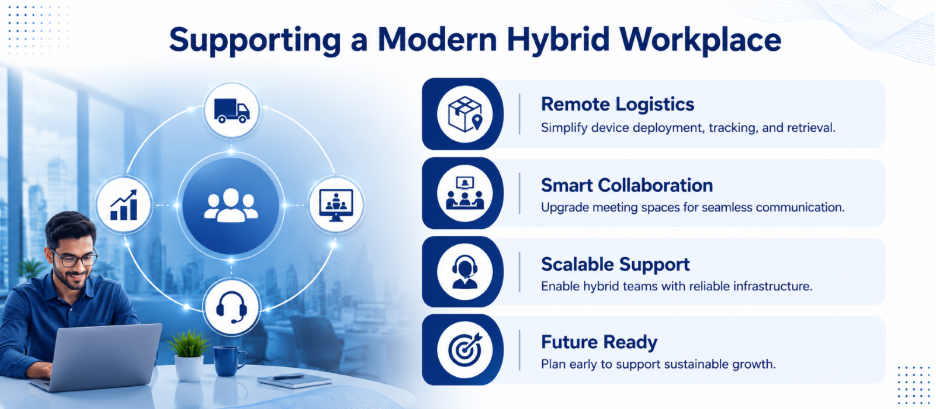
Traffic in Bangalore means employees are often spread across the city or working remotely from other states entirely. Also, shipping a laptop, configuring it remotely, and retrieving it when someone exits the company is a logistics challenge.
Businesses that skip this planning end up with lost devices, delayed onboarding, and messy offboarding. This is one area where generic support falls short, and where specialised IT infrastructure services in Bangalore, built around structured warehousing and logistics support, solve the problem efficiently.
8. Underestimating Boardroom and Collaboration Technology
Client calls, investor meetings, and hybrid stand-ups all depend on video conferencing setups. A boardroom with a laggy webcam and patchy audio doesn’t just frustrate the team; it shapes how clients perceive the business. Therefore, boardroom technology deserves the same planning attention as laptops and servers, not an afterthought once the furniture arrives.
9. No Backup or Disaster Recovery Plan
A single hard drive failure or ransomware incident can wipe out months of client data, financial records, or product code when there’s no backup strategy. Many small businesses assume cloud storage alone covers this, but without a tested recovery process, restoring operations after an incident can take days instead of hours.
Regular, verified backups remain one of the cheapest insurance policies a growing business can buy. Therefore, a basic requirement of any serious IT infrastructure services in Bangalore should include a documented recovery process.
10. Treating IT as a Cost Centre, Not a Growth Enabler
The biggest mistake is really a mindset problem: viewing IT spending purely as overhead rather than as infrastructure. A business hiring aggressively needs IT infrastructure services in Bangalore that scale with headcount. Therefore, budgeting for scalable, managed IT support from day one avoids painful, expensive overhauls later on.
Getting It Right From the Start
None of these mistakes are hard to fix. They’re mostly about planning ahead instead of reacting under pressure. Businesses that invest early in dependable IT infrastructure services in Bangalore spend less time firefighting and more time actually growing. If your team currently sits between 30 and 100 people, it’s worth reviewing your current setup rather than guessing what you’ll need next quarter. Speak with our experts to discuss your business requirements.
FAQs
1. What counts as “IT infrastructure” for a small business?
It covers everything that keeps daily operations running: laptops and desktops, networking equipment (routers, switches, firewalls), servers or cloud hosting, backup systems, collaboration tools, and the support staff or partner who maintains all of it.
2. How much should a growing business in Bangalore budget for IT?
This varies widely by team size and industry, but a common approach is to budget IT as a percentage of overall operating costs and revisit it every time headcount crosses a growth milestone.
3. Why does Bangalore’s power supply affect IT planning specifically?
Localized outages and voltage fluctuations are more frequent during heavy monsoon periods, and unprotected servers or networking equipment are vulnerable to data loss or hardware damage during sudden power cuts.
4. Is it better to hire an in-house IT team or outsource?
For most businesses under 100 employees, outsourcing to a managed IT partner is more cost-effective, since it avoids the overhead of full-time salaries while still providing broad technical coverage.
5. What is the difference between reactive and proactive IT support?
Reactive support means calling for help only after something breaks. Proactive support involves scheduled monitoring, maintenance, and updates designed to catch problems before they cause downtime.