Why Your IT Vendor is Slowing Down Your Business Growth
In this digital-first economy, your IT infrastructure is not just a support function; it is a growth engine. From managing cloud environments to maintaining cybersecurity and enabling seamless collaboration, IT plays a key role in how efficiently your business operates.
However, many organizations unknowingly face a major obstacle: their IT vendor.
If your systems are slow, your teams are frustrated, or your innovation pipeline feels stuck, your IT partner might be the reason. This is especially relevant when evaluating IT vendors in Bangalore, where businesses often have multiple options but varying service quality.
In this blog, we explore how the wrong IT vendor can limit your business growth, the warning signs to watch for, and how to make smarter decisions moving forward.
Understanding the Role of IT Vendors
IT vendors provide services like:
- Infrastructure management
- Cloud services
- Network security
- Software development and maintenance
- Helpdesk and technical support
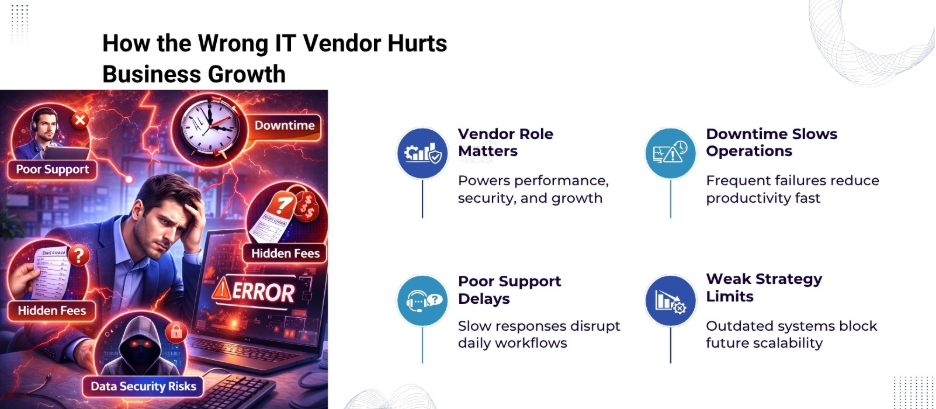
A reliable vendor should act as a strategic partner, helping your business scale, adapt to change, and stay competitive. But when they fall short, the impact can ripple across every department.
7 Signs Your IT Vendor Is Slowing You Down
1. Frequent Downtime and System Failures
Downtime directly affects productivity, revenue, and customer experience. If your systems frequently crash or experience outages, it points to poor infrastructure management.
Even a few hours of downtime per month can result in:
- Lost sales opportunities
- Decreased employee productivity
- Damage to brand reputation
A capable vendor proactively monitors systems and resolves issues before they escalate.
2. Slow Response Times
When technical issues arise, response time matters. Delayed support can bring operations to a halt.
Signs of poor responsiveness include:
- Long wait times for ticket resolution
- Lack of 24/7 support
- No clear escalation process
Businesses working with inefficient IT vendors in Bangalore often report delays that hinder daily operations.
3. Lack of Scalability
As your business grows, your IT infrastructure should grow with it. If your vendor cannot support scaling needs, it becomes a bottleneck.
Common issues include:
- Difficulty upgrading systems
- Limited cloud capabilities
- Inflexible service packages
A growth-focused vendor builds scalable solutions from the start.
4. Outdated Technology Stack
Technology evolves rapidly. Vendors relying on outdated tools or legacy systems can hold your business back.
This may lead to:
- Poor system performance
- Compatibility issues
- Increased security risks
Modern businesses need vendors who stay updated with trends like cloud computing, automation, and AI-driven analytics.
5. Weak Cybersecurity Practices
Cybersecurity threats are increasing in both frequency and intricaty. If your IT vendor lacks strong security protocols, your business is at risk.
Warning signs include:
- No regular security audits
- Weak firewall and endpoint protection
- Lack of data encryption practices
A strong IT partner prioritizes security as a core service, not an afterthought.
6. Poor Communication and Transparency
Communication gaps can lead to misunderstandings, delays, and unmet expectations.
Red flags include:
- Unclear reporting
- Hidden costs
- Lack of regular updates
Transparent vendors provide clear documentation, performance reports, and proactive communication.
7. No Strategic Input
An IT vendor should do more than fix problems; they should help you plan for the future.
If your vendor only reacts to issues without offering strategic insights, you miss out on opportunities like:
- Cost optimization
- Digital transformation
- Process automation
The best IT vendors in Bangalore align their services with your long-term business goals.
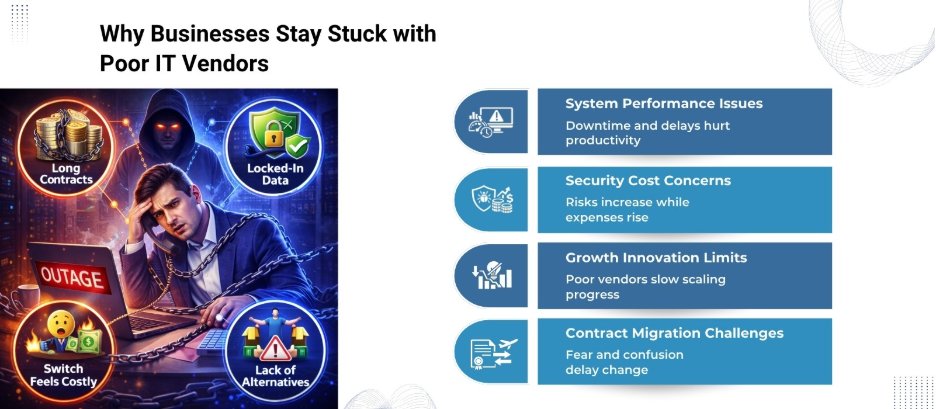
Impact of a Poor IT Vendor on Business Growth
Below is a quick comparison of how an inefficient vendor affects your organization:
| Area | With a Poor IT Vendor | With a Reliable IT Vendor |
| System Performance | Frequent downtime, slow systems | High uptime, optimized performance |
| Scalability | Limited growth capability | Flexible and scalable solutions |
| Security | High risk of breaches | Strong, proactive security measures |
| Support | Delayed responses | Fast, reliable support |
| Innovation | Stagnation | Continuous improvement and upgrades |
| Cost Efficiency | Hidden costs, inefficiencies | Transparent pricing, optimized spending |
| Business Growth | Slowed expansion | Accelerated growth |
Why Businesses Struggle with IT Vendors
Many organizations stick with underperforming vendors due to:
- Long-term contracts
- Fear of migration challenges
- Lack of technical knowledge to evaluate alternatives
- Initial low-cost offerings that later become expensive
Choosing the right partner requires a deeper evaluation beyond pricing.
What to Look for in IT Vendors in Bangalore
When evaluating IT vendors in Bangalore, consider these critical factors:
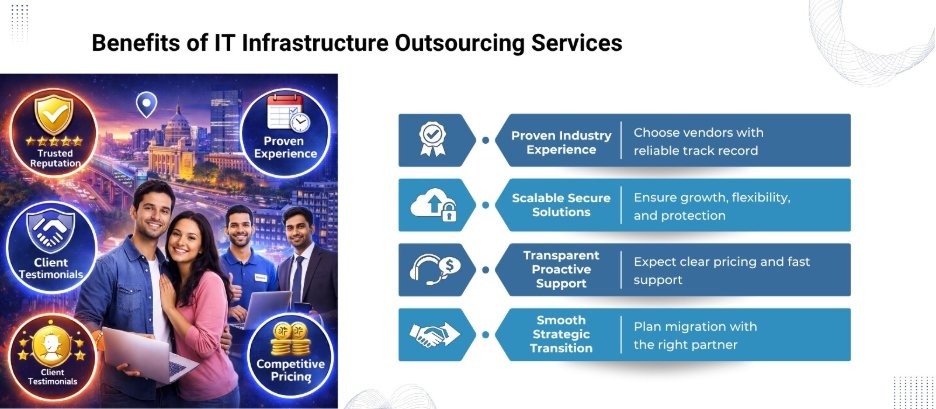
1. Proven Experience
Look for vendors with:
- A strong portfolio
- Industry-specific expertise
- Positive client testimonials
Experience indicates reliability and capability.
2. Scalable Solutions
Your vendor should support:
- Cloud migration
- Infrastructure expansion
- Integration with new technologies
Flexibility is essential for long-term growth.
3. Strong Security Framework
Key elements include:
- Regular security audits
- Data encryption
- Compliance with industry standards
Security should be embedded in every service.
4. Transparent Pricing
Avoid vendors with unclear pricing models. A reliable partner provides:
- Detailed cost breakdowns
- No hidden charges
- Predictable billing
5. Proactive Support
Instead of reacting to problems, your vendor should:
- Monitor systems continuously
- Identify risks early
- Provide preventive solutions
6. Strategic Partnership Approach
The best vendors act as consultants, helping you:
- Optimize operations
- Adopt new technologies
- Plan IT roadmaps
How to Transition to a Better IT Vendor
Switching vendors may seem complex, but with the right approach, it can be smooth.
Step 1: Audit Your Current IT Setup
Evaluate your infrastructure, performance gaps, and costs.
Step 2: Define Your Requirements
List your needs, such as scalability, security, and support.
Step 3: Shortlist Vendors
Compare multiple IT vendors in Bangalore based on expertise and services.
Step 4: Plan Migration Carefully
Work with your new vendor to create a structured transition plan.
Step 5: Monitor Performance
Track improvements in uptime, response time, and overall efficiency.
Why Choose Nurture IT?
Looking for a reliable IT partner in Indiranagar? Nurture IT stands out as one of the most trusted IT vendors, helping businesses streamline operations, improve security, and scale with confidence.
Why Choose Us?
- End-to-End IT Services: From managed IT and cloud solutions to cybersecurity and network management, we cover everything under one roof.
- Proactive Support: We identify issues and resolve them before they impact your business.
- Scalable Solutions: Infrastructure that grows with your business needs.
- Strong Cybersecurity: We offer advanced protection to keep your data safe.
- Transparent Pricing: No hidden costs, just clear and predictable plans.
Nurture IT doesn’t just fix problems; they help you plan for the future. With fast support, modern technology, and a business-focused approach, they act as a true growth partner.
FAQs
1. How do I know if my IT vendor is underperforming?
Look for signs like frequent downtime, slow support response, outdated systems, and a lack of proactive communication.
2. Why are IT vendors important for business growth?
They manage critical infrastructure, improve efficiency, and enable digital transformation, all of which directly impact growth.
3. What industries benefit most from IT vendors?
Almost all industries, including healthcare, finance, retail, and manufacturing, rely heavily on IT services.
4. Is switching IT vendors risky?
It can be managed with proper planning, audits, and phased migration strategies.
5. How often should I evaluate my IT vendor?
At least once a year, or whenever you notice performance issues or changing business needs.