IT Infrastructure Outsourcing Checklist: 15 Things to Audit Before Handing Over Your IT
Handing over your IT infrastructure to an outside partner is one of the biggest operational decisions a growing business will make. Done well, IT infrastructure outsourcing services free up your team, cut costs, and bring in expertise you could not hire in-house. Done poorly, they create security gaps, contract disputes, and a painful vendor exit later. Therefore, audit both your own environment and the provider before you sign anything. This checklist walks through 15 things worth checking first.
1. Map Every Asset You Currently Own
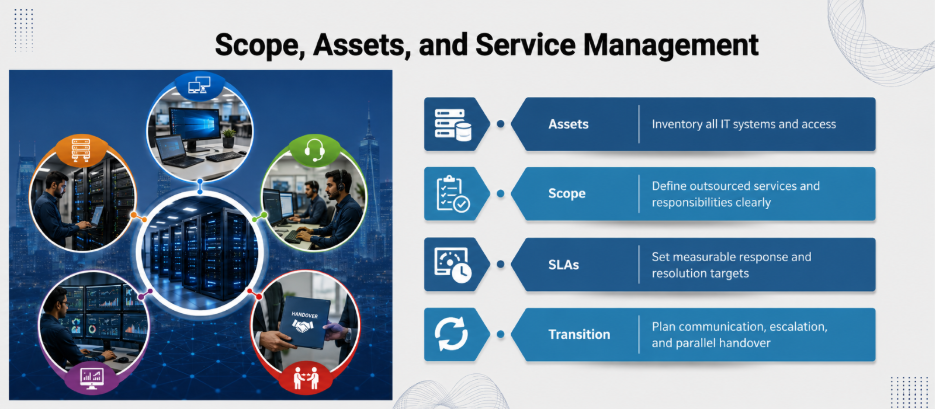
Before any vendor touches your systems, build a full inventory: servers, laptops, licenses, network devices, cloud accounts, and who holds admin rights to each. Without this list, you cannot confirm what the new provider is actually managing. Gaps here are how devices and licenses quietly disappear during a transition. This IT procurement checklist is a useful starting point if this inventory doesn’t already exist.
2. Define the Exact Scope of the Handover
“IT support” means different things to different vendors. Spell out, in writing, what’s included: helpdesk, network management, cybersecurity, procurement, backups, or all of it. Vague scope is the single biggest source of disputes with an IT outsourcing services provider once the contract is live.
3. Check for Recognized Security Certifications
Ask for proof, not promises. ISO 27001 and SOC 2 reports show a provider has documented, audited security processes. If a vendor can’t produce a certificate or a recent audit summary, treat that as a red flag.
4. Confirm Data Residency and Storage Location
Where will your data physically sit, and does that location comply with India’s data protection laws? For businesses using IT outsourcing services, this becomes especially important when vendors use cloud platforms or infrastructure located outside India.
5. Review SLA Response and Resolution Times
A service level agreement should state exact response times for critical, high, and low priority tickets — not vague language like “prompt support.” Get these numbers in writing, and attach penalties for missed targets.
6. Verify Backup and Disaster Recovery Plans
Ask for the provider’s Recovery Time Objective and Recovery Point Objective, and find out when they last tested a real restore. A backup that has never been tested is a backup you cannot trust in an emergency.
7. Understand Access Control and Credential Management
Find out how the provider handles admin credentials, whether they rotate passwords, and how access gets revoked when an engineer leaves their team. Weak internal access hygiene at your vendor becomes your risk too.
8. Ask About Subcontractors and Fourth Parties
Many providers quietly outsource parts of their own delivery. Ask directly whether any subcontractors will touch your systems or data, and get their security posture disclosed as well.
9. Read the Exit Clause Before You Read Anything Else
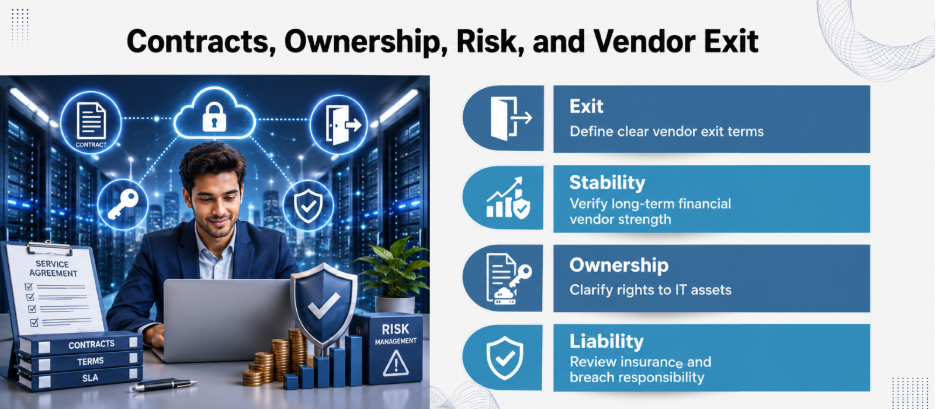
A contract without a clear exit clause can trap you with a provider that isn’t performing. Confirm the notice period, the data return format, and any fees tied to leaving. If a provider hesitates to discuss this, that hesitation tells you something. Our piece on switching IT vendors without downtime breaks down what a clean exit actually looks like.
10. Request Proof of Financial Stability
A provider going out of business mid-contract is a real risk, especially with smaller IT outsourcing services companies. Therefore, ask for basic financial health indicators, or at minimum, references from clients who have worked with them for three-plus years.
11. Check Compliance With Local Data Protection Law
In India, that means alignment with the Digital Personal Data Protection Act, 2023. Confirm the provider’s contractual and security practices support your obligations under the applicable DPDP requirements. Liability doesn’t transfer away just because the work does.
12. Clarify Ownership of Licenses and Configurations
Software licenses, custom scripts, network configurations — who owns these once the contract ends? Get this in writing so you’re not rebuilding your environment from scratch if you switch providers later.
13. Set Up a Communication and Escalation Matrix
Know exactly who to call when something breaks at 11 PM, and what happens if the first person doesn’t respond. A missing escalation path is one of the most common reasons outages drag on longer than they should.
14. Confirm Insurance and Liability Coverage
Ask whether the provider carries cyber liability insurance and what it actually covers. If a breach happens on their watch, you want clarity on who bears the financial and legal consequences.
15. Plan a Parallel-Run or Transition Period
Don’t cut over on day one. A short parallel-run period, where the new provider shadows or co-manages alongside your existing setup, makes it easy to catch gaps before they become outages. This single step prevents most of the chaos businesses associate with switching support models. If you’re still deciding between models, this comparison of co-managed and fully managed IT services is worth reading first.
Why This Audit Matters More Than the Sales Pitch?
Every IT outsourcing services company makes a strong case in its pitch deck. The real value of IT infrastructure outsourcing services shows up long after the contract is signed — when something breaks at 2 AM, and you find out whether the provider actually delivers on what they promised.
A provider that answers your questions on SLAs, certifications, and exit terms clearly is one you can build a long-term relationship with. If you want to run a similar audit on your current setup before you even start vendor conversations, this guide on auditing an IT infrastructure support system covers that ground in detail.
Getting the Handover Right
IT infrastructure outsourcing services work best when the audit happens before the contract, not after the first outage. Work through this checklist line by line, get every answer in writing, and don’t sign until the gaps are closed. A properly audited handover to the right provider saves you far more time than the audit itself costs.
Contact us to build a more reliable IT environment from day one.
FAQs
1. What’s the difference between IT infrastructure outsourcing and managed IT services?
Infrastructure outsourcing typically transfers ownership and day-to-day management of the underlying systems — servers, network, hardware — to a vendor. Managed IT services often layer support and monitoring on top of infrastructure you still own.
2. How long should a transition period take?
It depends on the size of your environment, but a two-to-six-week parallel run before full cutover is common for small and mid-sized businesses. That window gives the new provider time to test access, backups, and escalation paths without customers noticing anything changed.
3. Should I outsource my entire IT infrastructure or only parts of it?
Many businesses start with hardware and helpdesk while keeping cybersecurity policy decisions in-house, then expand scope once trust is established. Full outsourcing tends to work better once you have a tested SLA track record with the provider.
4. How do I check a provider’s financial stability before signing?
Ask for client references who have worked with them for several years, and check whether they can demonstrate an uninterrupted service history.
5. Is outsourcing cheaper than hiring an in-house IT team?
For most small and mid-sized businesses, yes, largely because you avoid the fixed cost of full-time specialists across every discipline.